
This cannolis recipe makes the Sicilian pastry at home: thin shells fried until crisp and blistered, then filled at the last minute with sweetened ricotta and mascarpone. This version adds a touch of cocoa to the dough and mini chocolate chips to the cream.
It makes 10 medium cannoli. You need cannoli tubes and a pot for frying. Count about 1 hour 25 minutes, including 30 minutes of resting for the dough, plus an overnight drain for the ricotta, which is the step that makes the biggest difference to the result.
Below the recipe card you will find what cannoli are, why each step in this cannolis recipe matters, how to fry the shells safely, a table of fixes, chocolate variations and how to make everything ahead.
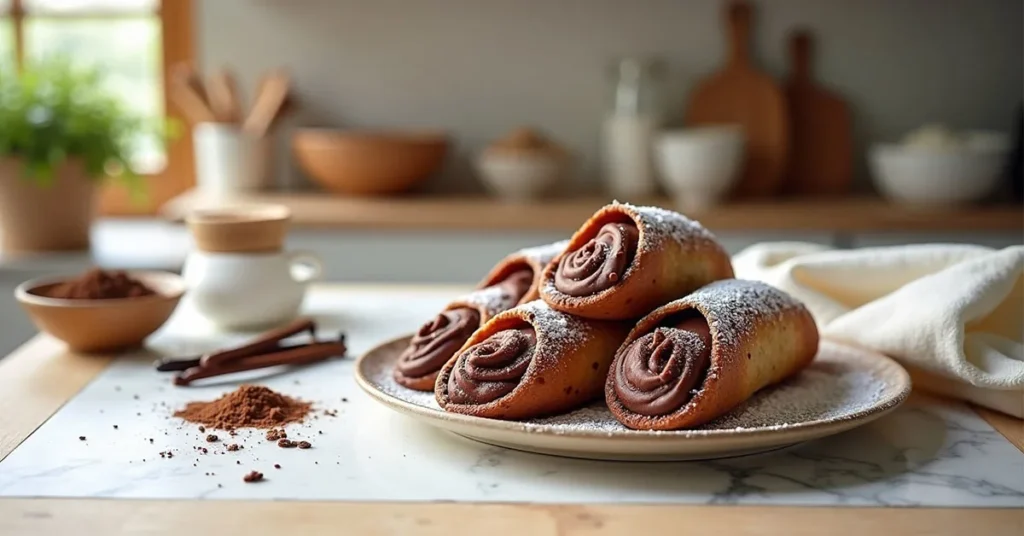
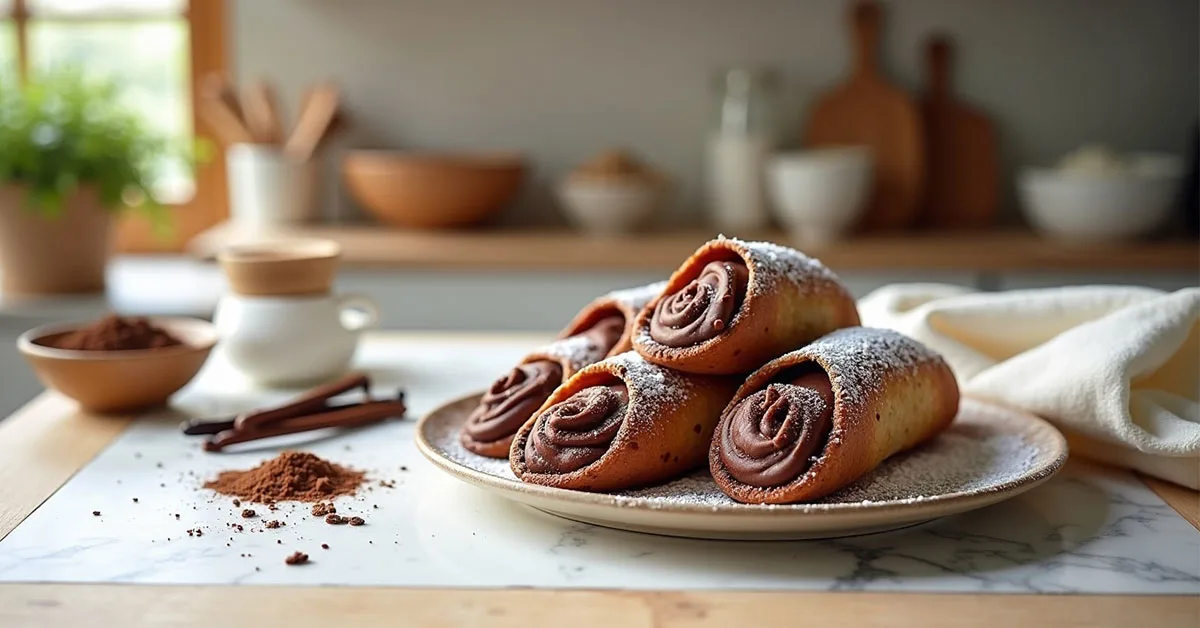

Cannolis Recipe
Ingredients
Method
- Drain the ricotta. The day before, put the ricotta in a sieve lined with a clean cloth over a bowl and leave it in the fridge overnight.
- Make the dough. Mix the flour, sugar, cocoa and salt. Rub in the cold butter until it looks like breadcrumbs. Add the egg yolk and wine, mix, then knead for 5 minutes until smooth. Wrap and chill for 30 minutes.
- Make the filling. Beat the drained ricotta and mascarpone until smooth. Mix in the powdered sugar and vanilla, then fold in the mini chocolate chips. Chill for at least 30 minutes.
- Shape the shells. Roll the dough 1–2 mm thin and cut 10 cm circles. Wrap each circle loosely around a lightly greased cannoli tube and seal the overlap with a dab of egg white, pressing firmly.
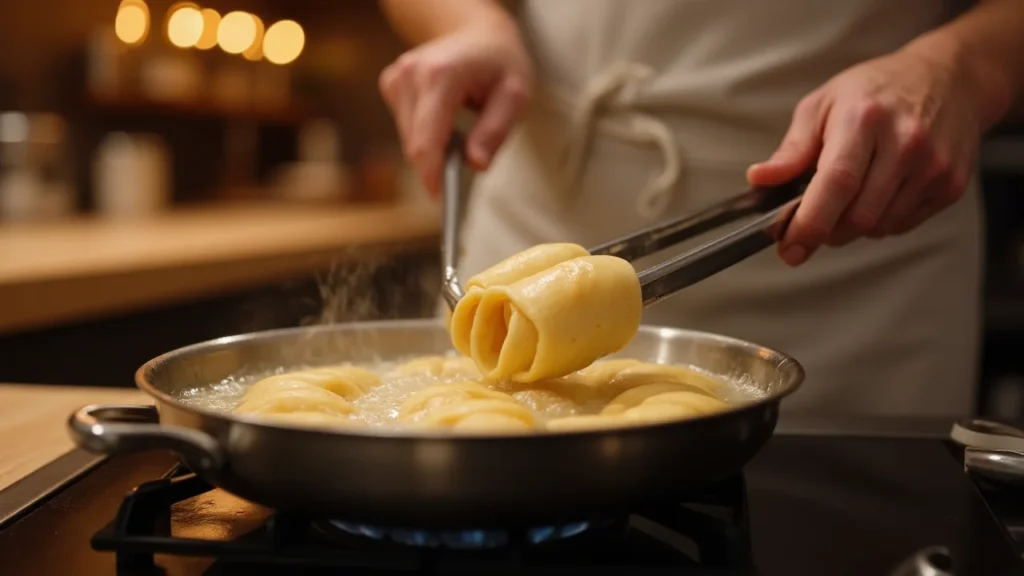
- Fry. Heat the oil to 175–180 °C in a heavy pot filled no more than halfway. Fry 2 or 3 shells at a time for 1–2 minutes, until golden and blistered. Drain on paper towels and slide the shells off the tubes while warm, holding them with a towel. Let them cool completely.
- Fill and serve. Less than an hour before serving, pipe the filling into both ends of each shell. Dip the ends in melted chocolate and crushed pistachios if you like, then dust with powdered sugar.
Notes
What is a cannoli?
In Italian, one pastry is a cannolo and several are cannoli. “Cannolis” is the plural many English speakers use, and it is how most people search for them, so you will see both words on this page. The pastry comes from Sicily, where it has long been associated with the Carnival season; you can read more about its history on Wikipedia’s cannoli page.
A cannolo is a tube of thin fried dough, crisp and covered in small blisters, filled with sweetened ricotta. In Sicily the ricotta is usually made from sheep’s milk and flavored with candied orange or chocolate, and the ends are often dipped in chopped pistachios. Pastry shops fill them to order, because a filled shell softens within a few hours.
This cannolis recipe uses cow’s milk ricotta, which is easier to find outside Italy, made richer and smoother with a little mascarpone. The chocolate comes in three places: cocoa in the shells, mini chips in the filling and, if you like, melted chocolate on the ends.
Why this cannolis recipe works
- Ricotta drained overnight: draining removes the whey, which would otherwise make the filling runny and the shells soggy. It is the single most important step.
- A little mascarpone: it makes the filling richer and smoother, and helps it hold its shape when piped.
- Wine in the dough: its acidity keeps the dough tender, and the alcohol turns to vapor quickly in the hot oil, which creates the typical bubbles and blisters. Water with a teaspoon of vinegar works almost as well.
- Very thin dough: rolled to 1–2 mm, the shells fry light and crisp. Thicker dough gives hard, bready shells.
- Oil at 175–180 °C: hot enough to crisp the shells in 1 to 2 minutes without soaking them in oil.
- Filling at the last minute: once filled, the shells start to soften, so they are filled no more than an hour before serving.
Ingredients for this cannolis recipe
Here is what each ingredient does and what you can change.
- All-purpose flour (190 g, 1½ cups): plus extra for rolling. Bread flour makes the dough harder to roll thin.
- Sugar (2 tablespoons) and salt (¼ teaspoon): just enough to season the shells, which should not be sweet.
- Unsweetened cocoa powder (1 teaspoon): it gives the shells a darker color and a slight chocolate note.
- Cold butter (2 tablespoons, 28 g): lard is the traditional choice and gives slightly flakier shells.
- Egg yolk (1 large) and Marsala or dry white wine (60 ml, ¼ cup): the yolk adds richness; the wine adds tenderness and blisters.
- Egg white (1): only for sealing the overlap of each shell.
- Neutral oil for frying (about 1 liter): sunflower, canola or peanut oil.
- Whole-milk ricotta (250 g, 1 cup), drained: sheep’s milk ricotta if you can find it, for the most traditional flavor.
- Mascarpone (115 g, ½ cup): cold from the fridge.
- Powdered sugar (30 g, ¼ cup) and vanilla (½ teaspoon): powdered sugar dissolves without making the filling grainy.
- Mini chocolate chips (60 g, ⅓ cup): they stay in small pieces. Melted chocolate folded into cold ricotta sets into hard flakes instead.
- To finish (optional): 50 g of dark chocolate, melted, and 2 tablespoons of crushed pistachios for the ends.
The dough makes a few more shells than you need for 10 cannoli. Fry them all: one or two may crack, and spare shells keep for a week.
Cups and grams
| Ingredient | US measure | Metric |
|---|---|---|
| All-purpose flour | 1½ cups | 190 g |
| Marsala or white wine | ¼ cup | 60 ml |
| Whole-milk ricotta, drained | 1 cup | 250 g |
| Mascarpone | ½ cup | 115 g |
| Powdered sugar | ¼ cup | 30 g |
| Mini chocolate chips | ⅓ cup | 60 g |
Equipment
The only special equipment this cannolis recipe needs is a set of cannoli tubes. Everything else is standard kitchen equipment.
- Cannoli tubes: metal tubes about 2 cm wide. Four to six let you fry in batches. Without them, wrap the dough around clean wooden dowels covered in foil.
- Heavy, deep pot: filled no more than halfway with oil, so it cannot bubble over.
- Thermometer: keeping the oil at the right temperature is what makes the shells crisp rather than greasy.
- Rolling pin or pasta machine: a pasta machine makes it easy to roll the dough evenly thin.
- 10 cm round cutter: or a small bowl and a knife.
- Tongs or a slotted spoon, paper towels, and a piping bag: for lifting, draining and filling.
- Fine sieve and a clean cloth: for draining the ricotta overnight.
How to make cannolis: frying the shells
Frying the shells is the step most people worry about. These points make it straightforward and safe.
- Rest the dough for 30 minutes. It relaxes and rolls out thin without shrinking back.
- Roll it to 1–2 mm. You should almost see the counter through it. Thick dough does not blister.
- Wrap loosely. Grease the tubes lightly, then wrap each circle around a tube without pulling it tight, so the shell slides off easily after frying.
- Seal only the overlap. Brush a little egg white where the edges meet and press firmly. Egg white on the tube makes the shell stick.
- Fry 2 or 3 at a time at 175–180 °C. Lower them gently with tongs and fry for 1 to 2 minutes, until golden and blistered. Too many at once cools the oil.
- Remove the tubes while the shells are warm. Hold each shell in a towel and slide the tube out. Let the tubes cool before wrapping the next batch, or the dough starts to cook on them.
- Never leave the oil unattended. Keep the handle turned inward and a lid nearby, and make sure the tubes and dough are dry before they go in.
Once you have finished, let the oil cool completely in the pot before straining or discarding it. Strained through a fine sieve, it can be used once more for frying.
How to fill cannoli
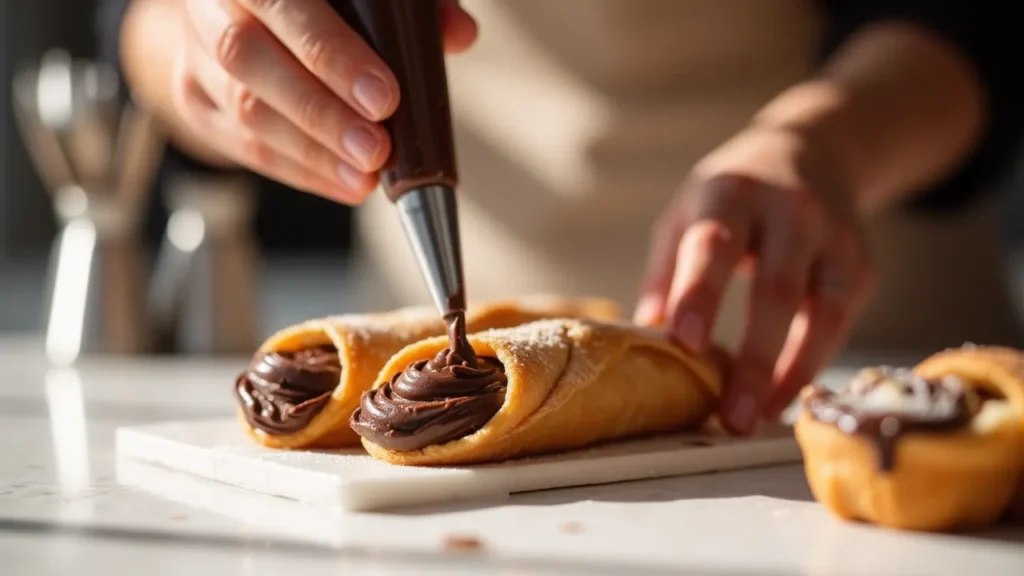
Beat the drained ricotta and mascarpone until smooth, add the powdered sugar and vanilla, then fold in the chips and chill the filling for at least 30 minutes, so it pipes cleanly. Use a piping bag with a wide plain tip, or simply cut off the end of the bag, and fill each shell from both ends so the center is full.
Dip the ends in melted chocolate and then in crushed pistachios if you like, and dust the shells with powdered sugar just before serving.
A simple timeline
- The day before — drain the ricotta in a cloth-lined sieve in the fridge.
- 0:00 — make the dough and chill it; make the filling and chill it (40 minutes in total).
- 0:40 — roll, cut and wrap the first shells while the oil heats (20 minutes).
- 1:00 — fry all the shells in batches (15 minutes).
- 1:15 — let the shells cool, then fill them just before serving.
Common problems and how to fix them
Most problems with a cannolis recipe come from the oil temperature, the thickness of the dough or wet ricotta.
| Problem | Likely cause | Fix |
|---|---|---|
| Shells open in the oil | The overlap was not sealed | Brush egg white on the overlap and press it firmly |
| Shells stick to the tubes | Egg white on the tube, or ungreased tubes | Grease the tubes lightly and seal only the dough overlap |
| Greasy, heavy shells | Oil too cold | Keep the oil at 175–180 °C and fry fewer at once |
| Shells brown before blistering | Oil too hot | Lower the heat and let the oil come back to 175 °C |
| Hard, thick shells | Dough rolled too thick | Roll it to 1–2 mm, or use a pasta machine |
| Runny filling | Ricotta not drained | Drain it overnight and chill the filling before piping |
| Grainy filling | Coarse ricotta | Press the ricotta through a fine sieve before mixing |
| Soggy shells | Filled too early | Fill less than an hour before serving, or line the shells with chocolate |
Chocolate cannoli variations
Once the basic cannolis recipe works for you, the chocolate can play a bigger role.
- Chocolate filling: sift 2 tablespoons of unsweetened cocoa into the ricotta cream with the sugar.
- Chocolate shells: increase the cocoa in the dough to 1 tablespoon and add 1 tablespoon more wine.
- Chocolate-lined shells: brush the inside of each cooled shell with melted dark chocolate (about 30 g in total) and let it set. The chocolate keeps the shells crisp for longer once filled.
- Dipped ends: dip both ends in melted dark chocolate, then in crushed pistachios or chopped hazelnuts.
- Orange and chocolate: add the zest of half an orange to the filling, a classic Sicilian pairing.
- Ganache drizzle: drizzle a little warm chocolate ganache over the filled cannoli just before serving.
How to serve cannoli
Serve cannoli within an hour of filling, dusted with powdered sugar, one or two per person. They go well with an espresso or a small glass of dessert wine such as Marsala.
For a party, keep the shells and the filling separate and fill them in front of your guests, so every cannolo is crisp. Broken shells are not wasted: serve them on the side with a bowl of the filling as a dip.
For smaller portions, cut 7 cm circles and wrap them around thinner tubes: this cannolis recipe then gives about 20 mini cannoli, which suit a dessert table better than full-size ones.
Make ahead and storage
Every part of this cannolis recipe can be made ahead; only the filling of the shells has to wait until the end.
- Dough: up to 2 days in the fridge, well wrapped.
- Fried shells: up to 1 week in an airtight tin at room temperature, or 1 month in the freezer. Re-crisp them for 3 minutes in a 180 °C oven and let them cool before filling.
- Filling: up to 2 days in the fridge, covered. Do not freeze it: ricotta turns grainy when thawed.
- Filled cannoli: best eaten the same day. Keep leftovers in the fridge and eat them within a few hours.
Cannolis recipe FAQ
What is the difference between cannoli and cannolis?
Nothing but the grammar. In Italian, cannolo is singular and cannoli is plural; cannolis is the plural many English speakers use. All three words refer to the same pastry.
Can I make this cannolis recipe without frying?
Yes. Brush the dough with oil and bake it on the tubes at 200 °C for 10–12 minutes. The shells are paler and less blistered, but still crisp.
Why do my shells open in the oil?
The seam was not sealed. Brush egg white only where the dough overlaps and press it firmly; egg white on the tube itself makes the shell stick.
Can I use store-bought shells?
Yes, the filling works the same. Crisp them for 3 minutes in a 180 °C oven and let them cool before filling.
What can I use instead of mascarpone?
Use all ricotta, about 375 g (1½ cups), well drained. The filling is lighter and slightly less creamy.
Can I make this cannolis recipe without wine?
Yes. Replace the wine with the same amount of water and 1 teaspoon of white vinegar. The shells still blister well.
How far ahead can I make cannoli?
Fry the shells up to a week ahead and make the filling up to 2 days ahead. Fill them less than an hour before serving.
Why are my cannoli shells smooth, without blisters?
The dough was too thick, or the oil was not hot enough. Roll the dough to 1–2 mm and fry at 175–180 °C; the wine in the dough also helps the blisters form.
How can I drain ricotta quickly?
Spread it on a plate lined with several layers of paper towel, cover it with more paper and press with a light weight for 1 hour, changing the paper once. Overnight in a cloth-lined sieve still gives the best result.
More chocolate desserts to try
- Chocolate mousse: another make-ahead dessert with a light, creamy texture.
- Chocolate ganache recipe: ideal for dipping or drizzling the cannoli.
- Chocolate strawberry trifle: a layered dessert for a crowd.
Happy baking! — Hassoun