

German chocolate cake frosting
Table of Contents
Introduction: german chocolate cake frosting
If you have ever tasted a German chocolate cake frosting that made you pause mid-bite, you already know its magic. Creamy, nutty, and unapologetically indulgent, this classic coconut pecan frosting is the soul of a true German chocolate cake—and yes, it deserves the spotlight. I created this German chocolate cake frosting recipe for home bakers who want rich flavor without stress, whether you are frosting a layer cake, topping cupcakes, or sneaking a spoonful straight from the pan (no judgment here).
What truly sets this frosting apart is its perfect harmony of flavors and texture. The sweetness of condensed milk, the crunch of pecans, and the chew of coconut come together in a way that feels nostalgic yet endlessly versatile. If you have ever wondered how to make German chocolate cake frosting that turns out smooth, glossy, and perfectly thick every time, you are in the right place. Pull up a chair, grab your whisk, and feel free to share your own frosting memories—because the best chocolate desserts always come with a story.
Why Choose This Recipe german chocolate cake frosting
If you are looking for a German chocolate cake frosting that tastes authentic, feels indulgent, and still fits into real life baking, this recipe was made for you. It focuses on flavor, texture, and reliability—three things that truly matter when frosting a cake or finishing a dessert.
Here is why this German chocolate cake frosting recipe stands out:
- Classic flavor, perfected: This is a true coconut pecan frosting, rich and creamy with just the right balance of sweetness. Each spoonful captures the iconic flavor that makes German chocolate cake so memorable.
- Smooth and foolproof texture: If you have ever struggled with grainy or runny frosting, this method solves that. You will learn how to make German chocolate cake frosting that thickens beautifully and spreads with ease.
- Fast and practical: Designed as a fast recipe, it comes together quickly without sacrificing depth of flavor—perfect for last-minute cakes or quick desserts.
- Versatile beyond cake layers: This frosting works just as well as a frosting for German chocolate cake, a topping for cupcakes, or even as a warm filling between dessert layers.
- Home baker–friendly: With simple ingredients and clear steps, this recipe proves that the best recipe does not need complicated techniques or professional equipment.
In short, this frosting is rich without being heavy, indulgent without being fussy, and dependable enough to become your go-to for chocolate desserts. Once you try it, you may find yourself making the frosting first—and the cake second.
Here’s a professional, visually organized recipe summary table for your German Chocolate Cake Frosting, designed for easy readability and platform-friendly presentation:
| 🍫 Recipe Details | Information |
| ⏱ Preparation Time | 10 minutes |
| 🍳 Cooking Time | 10–12 minutes |
| ⏲ Total Time | 20–22 minutes |
| 🧁 Portions | Frosts 1 9-inch cake (or 12–14 cupcakes) |
| 🔥 Calories | ~150 kcal per 2-tbsp serving |
| 📂 Categorization | Details |
| 🥘 Course | Dessert / Frosting |
| 🍳 Cooking Method | Stovetop (medium-low heat) |
| ⚡ Difficulty | Easy to Medium |
| 🌍 Cuisine | American / Classic Chocolate |
| 🧑🍳 Skill Level | Beginner to Intermediate |
This summary gives readers a quick overview of the recipe, making it easy to decide whether to try it and providing all essential details for planning.
Ingredients in Quantities & Equipment Required
Before we turn on the heat, let’s get everything ready. This German chocolate cake frosting recipe is all about balance, so accurate measurements and the right tools make the process smooth—and honestly, far more enjoyable. Think of this as setting yourself up for stress-free success.
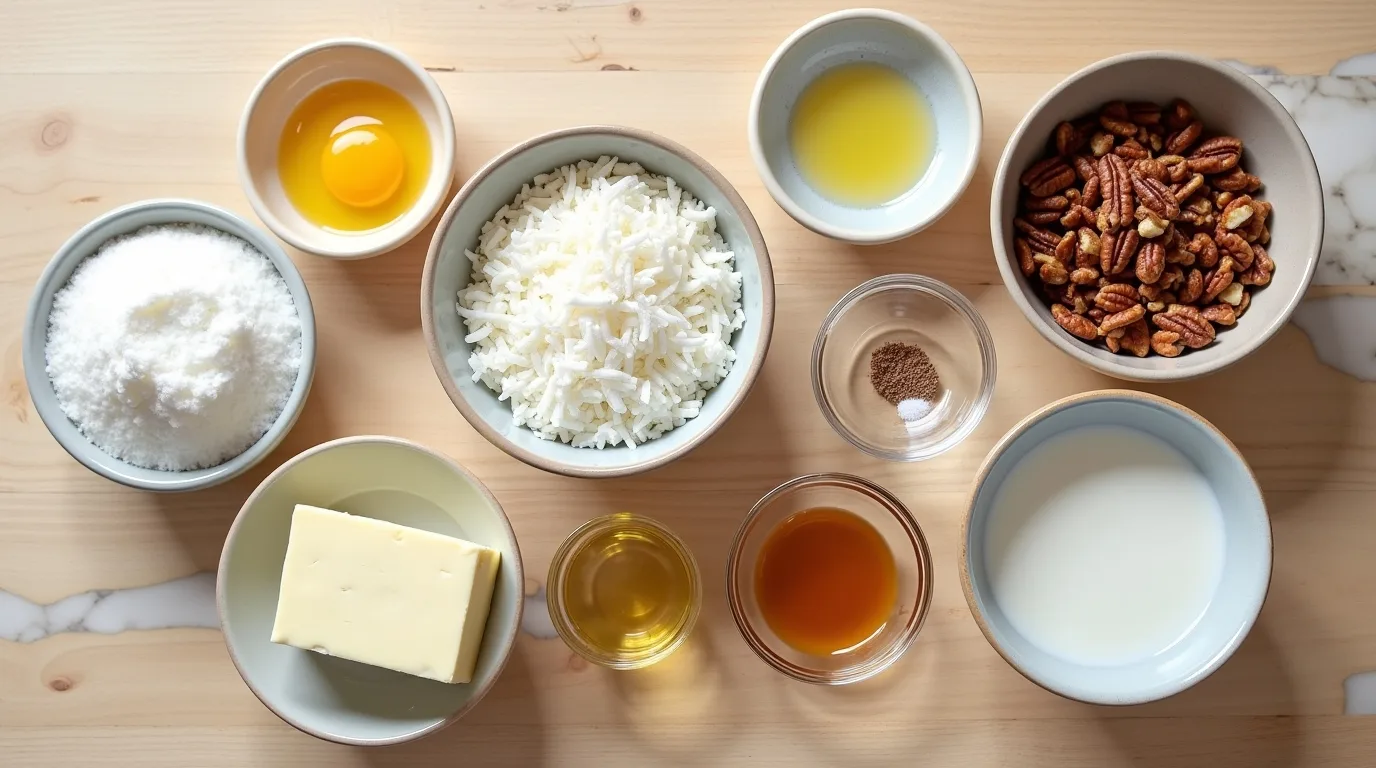
🧾 Ingredients (Enough to Frost One 9-Inch Cake)
- 240 ml (1 cup) evaporated milk: The creamy base that gives this German chocolate cake frosting its signature richness.
- 200 g (1 cup) granulated sugar: Sweetens the frosting while helping it thicken properly.
- 3 large egg yolks, lightly beaten: Essential for a smooth, custard-like texture.
- 115 g (½ cup) unsalted butter, cut into pieces: Adds richness and a silky mouthfeel.
- 1 teaspoon of vanilla extract: brings depth and smoothness, tying all the flavors together beautifully.
- 130 g (1½ cups) sweetened shredded coconut: The heart of classic coconut pecan frosting.
- 120 g (1 cup) finely chopped pecans: add a satisfying crunch along with a rich, distinctive nutty character.
- Pinch of salt: A small touch that sharpens all the flavors.
Ingredient note: Some versions use condensed milk, but evaporated milk gives better control over sweetness and thickness—ideal for a smooth, spreadable frosting.
🧰 Equipment You’ll Need
No fancy gadgets here—just reliable basics:
- Medium saucepan (heavy-bottomed if possible)
- Whisk
- Heat-resistant spatula
- Measuring cups and spoons
- Mixing bowl
- Cooling rack or heat-safe surface
With these ingredients measured and tools within reach, you are perfectly prepared to move into the next step of how to make German chocolate cake frosting—where the magic truly begins.
Preparation Steps in Detail
Now let’s bring this German chocolate cake frosting together. Don’t rush—this is one of those recipes where gentle heat and steady stirring reward you with a smooth, glossy, spoon-licking result. I’ll walk you through it as if we were standing side by side at the stove.
Step-by-Step Instructions
1- Build the base
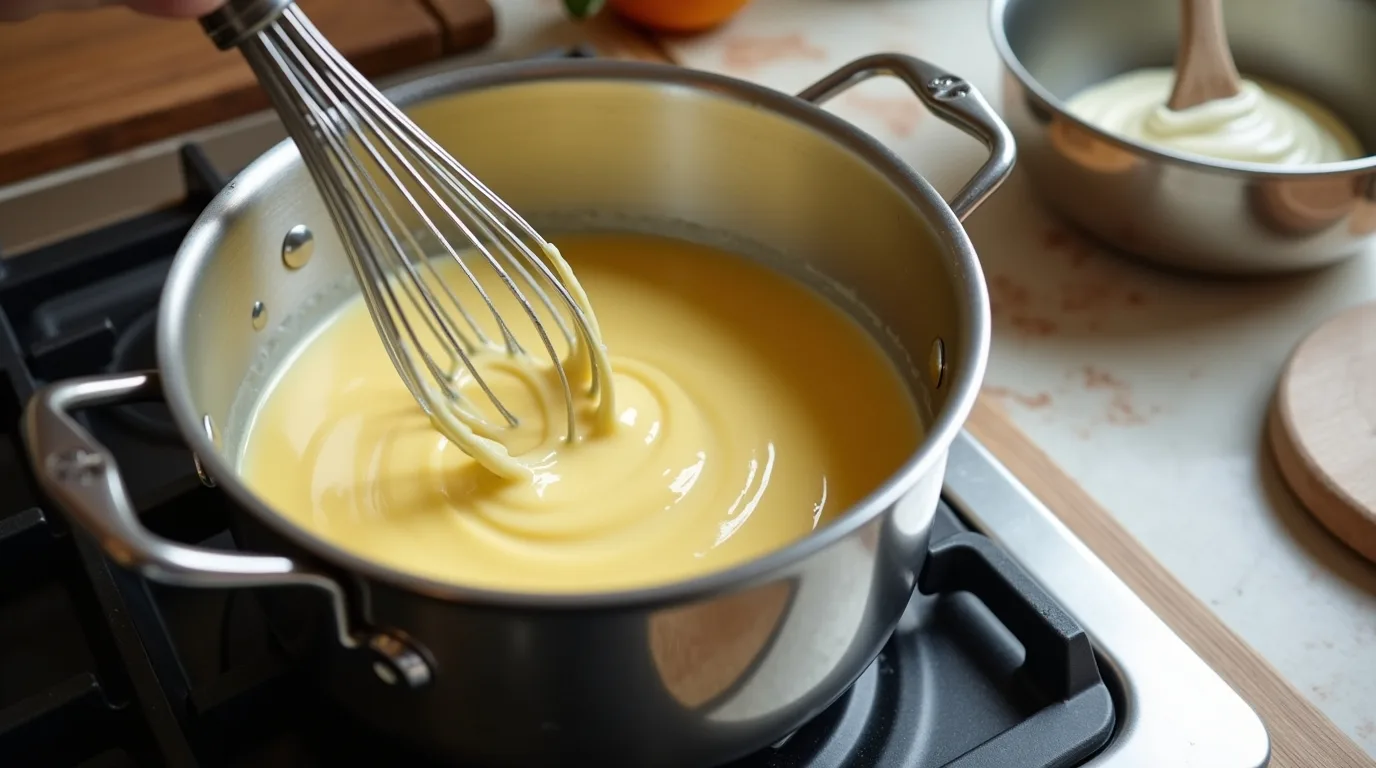
In a medium-sized saucepan, gently mix together the evaporated milk, sugar, egg yolks, and butter until well combined. Whisk everything together before turning on the heat—this helps prevent lumps and keeps the texture silky from the start.
2- Cook low and slow:
Set the saucepan over medium-low heat and cook gently, stirring continuously with a whisk or spatula to keep the mixture smooth. After about 8–10 minutes, the mixture will begin to thicken.
- You’re looking for a consistency that lightly coats the back of a spoon.
- If it thickens too quickly, lower the heat—patience is key when learning how to make German chocolate cake frosting properly.
3- Finish with flavor and texture:
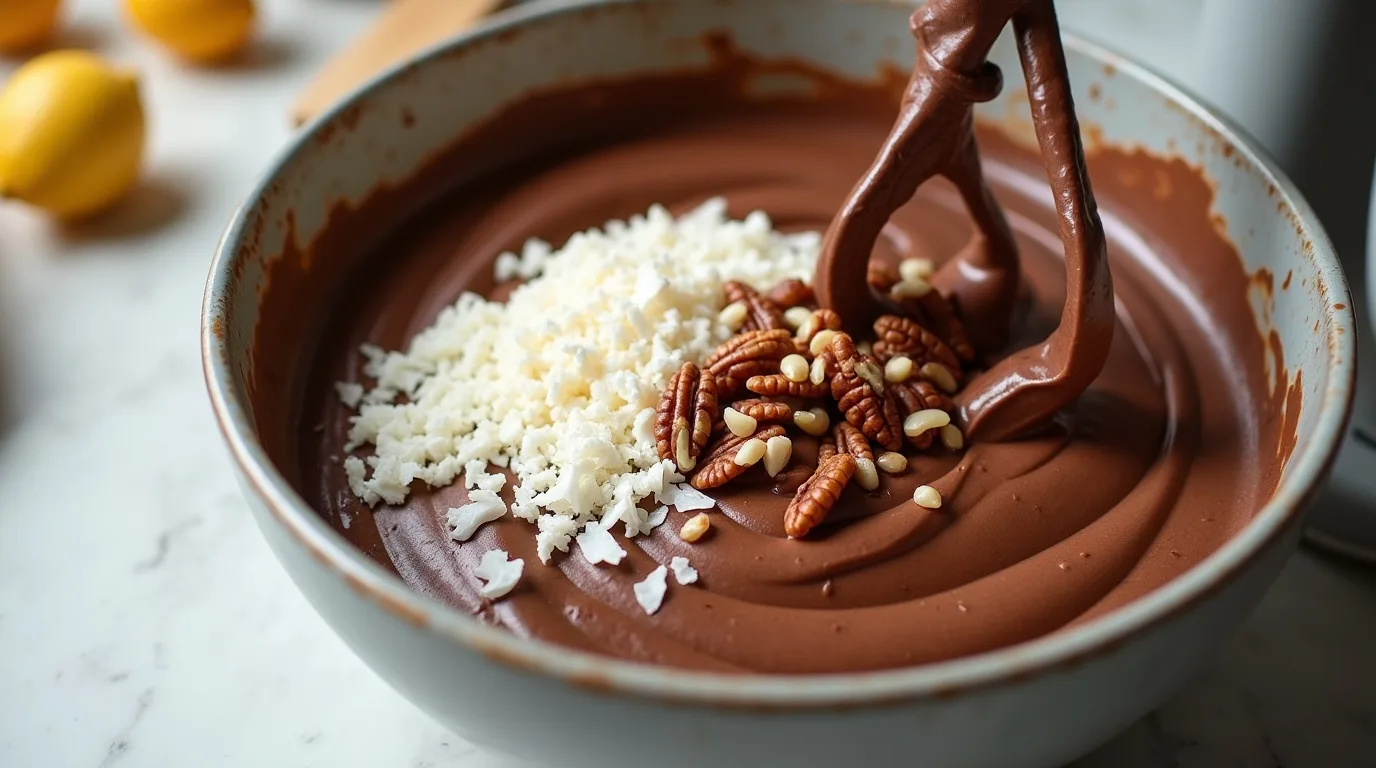
Take the pan off the heat, then mix in the vanilla extract and salt until fully incorporated. Then gently fold in the shredded coconut and chopped pecans. At this stage, the frosting transforms into the classic coconut pecan frosting everyone recognizes.
4- Cool before using:
Let the frosting cool at room temperature for 20–30 minutes. As it cools, it will thicken further into a perfectly spreadable texture—ideal as a frosting for German chocolate cake or as a rich filling for layers.
Helpful Tip
If the frosting feels slightly loose while warm, don’t panic. This German chocolate cake frosting recipe is designed to set as it cools. Resist the urge to overcook—it’s better to let time do the work than to risk a dry or grainy texture.
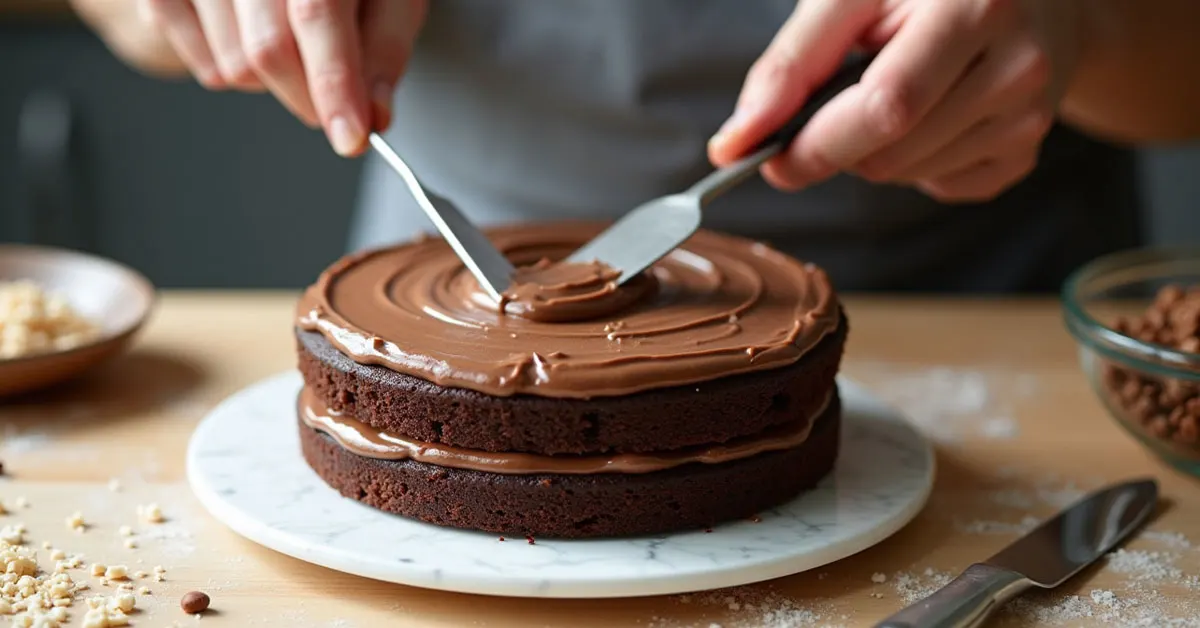
Once cooled, your frosting is ready to spread, swirl, or generously spoon onto your favorite chocolate dessert.
ChocoChefAI Tip: 7 Easy Hacks for Perfect Frosting
This German chocolate cake frosting is wonderfully forgiving, but a few smart tricks can elevate it from good to unforgettable. These seven easy hacks are the kind of tips pastry chefs swear by—and once you try them, you’ll never skip them again.
1. Whisk before heating: Always fully combine the milk, sugar, egg yolks, and butter before turning on the heat. This simple step prevents lumps and guarantees a smooth base from the start.
2. Keep the heat gentle: Low to medium-low heat is essential. High heat can scramble the eggs and ruin the texture. Slow cooking is the secret behind a silky German chocolate frosting.
3. Stir constantly, but calmly: Think steady, not frantic. Continuous stirring ensures even thickening and helps avoid sticking at the bottom of the pan.
4. Trust the cooling process: If the frosting seems thin while warm, resist the urge to keep cooking. This German chocolate cake frosting recipe thickens naturally as it cools.
5. Toast the nuts for extra flavor: Lightly toasting the pecans before adding them enhances their aroma and adds depth to the coconut pecan frosting.
6. Adjust texture with care: If the frosting becomes too thick, stir in 1–2 teaspoons of warm milk to loosen it gently—no reheating needed.
7. Use it warm or cool, on purpose: Warm frosting spreads easily between cake layers. Cooled frosting holds its shape beautifully on top
Master these seven hacks, and you’ll feel completely confident in how to make German chocolate cake frosting that is smooth, balanced, and bakery-worthy—every single time.
Creative Variations
Once you have mastered the classic German chocolate cake frosting, it’s time to have a little fun. This recipe is wonderfully adaptable, making it easy to tailor the flavor, texture, or sweetness to suit your dessert—and your mood. Think of these ideas as gentle nudges, not strict rules.
🍫 Chocolate-Forward Twists
- Extra chocolate depth: Stir in 2–3 tablespoons of finely chopped dark chocolate while the frosting is still warm. It melts softly and adds a richer chocolate note without overpowering the coconut.
- Milk chocolate version: For a sweeter, smoother profile, replace part of the butter with milk chocolate. This works beautifully for cupcakes or lighter desserts.
🥥 Coconut & Nut Variations
- Toasted coconut frosting: Lightly toast the shredded coconut before adding it. This enhances aroma and adds subtle crunch to your coconut pecan frosting.
- Nut swaps: Replace pecans with walnuts, almonds, or hazelnuts for a fresh take on German chocolate frosting.
🌿 Lighter & Creative Options
- Light recipe adjustment: Reduce the butter slightly and add a splash of milk for a softer, less rich frosting—ideal for a light dessert.
- Frosting meets fondue: Warm the frosting gently and use it as a thick chocolate fondue dip for cake cubes, fruit, or cookies.
🧁 Beyond Cake Layers
- Use it as a filling for cupcakes, a swirl on brownies, or even as a topping for simple sponge cakes.
- Pair it with chocolate cupcakes with vanilla frosting for contrast—rich coconut frosting inside, smooth vanilla on top.
These variations keep your German chocolate cake frosting recipe exciting and flexible, proving that one great base can lead to countless delicious desserts.
Storage, Conservation, and Smart Reuse
Your German chocolate cake frosting is too good to waste, and with proper storage, it keeps its flavor and texture beautifully. Think of this section as friendly guidance to help you enjoy every last spoonful—today and later.
🧊 How to Store It Correctly
- Refrigerator: Transfer the frosting to an airtight container and refrigerate for up to 5 days. The coconut and pecans hold up well, and the flavor often deepens overnight.
- Freezer-friendly: Yes, you can freeze it. Transfer to a freezer-safe container and keep frozen for up to two months while maintaining its quality. Thaw slowly in the refrigerator for best results.
ChocoChefAI’s Tip: Always let the frosting cool completely before storing to avoid excess moisture.
🔄 Bringing It Back to Life
Once chilled, the frosting will naturally set and become firmer—this is completely normal:
- Allow it to rest at room temperature for about 20 to 30 minutes before using.
- Stir gently with a spatula to restore its creamy consistency.
- If needed, add 1–2 teaspoons of warm milk to loosen it without diluting flavor.
This method works perfectly for any frosting for German chocolate cake, whether spread or piped.
🍰 Clever Ways to Reuse Leftovers
Don’t limit this German chocolate frosting recipe to cakes alone:
- Spread it on toast or waffles for an indulgent breakfast treat.
- Warm it slightly and drizzle over brownies or pancakes.
- Use it as a filling for cookies or sandwich biscuits.
- Spoon it over vanilla ice cream for a quick, impressive dessert.
🌱 Food-Smart Bonus
Reusing frosting reduces waste and stretches your baking efforts further—always a win in the kitchen.
With a little care, your coconut pecan frosting stays just as indulgent on day five as it was fresh off the stove.
Conclusion
Making German chocolate cake frosting at home is both an art and a delight. With a few simple ingredients, some gentle heat, and these carefully crafted steps, you can create a frosting that is rich, indulgent, and irresistibly textured.
Here’s why this recipe works so well:
- Reliable results every time – Following this German chocolate cake frosting recipe ensures smooth, creamy, and perfectly thick frosting.
- Versatile and creative – Use it on cakes, cupcakes, or as a decadent dessert topping. The flavor is classic, yet flexible for your own twists.
- Practical and sustainable – With proper storage and clever reuse tips, your homemade frosting lasts, reducing waste and letting you enjoy it beyond just one dessert.
Baking this frosting is more than a step in a recipe—it’s a small celebration of chocolate, coconut, and pecans coming together in perfect harmony. Once you try it, you’ll see why how to make German chocolate cake frosting at home can become a favorite ritual in your kitchen.
So grab your whisk, gather your ingredients, and enjoy every luscious bite—because a great frosting doesn’t just complement a cake; it makes it unforgettable.
Related Recipes
If you loved making this German chocolate cake frosting, why stop at one dessert? Exploring related recipes is a fun way to expand your baking repertoire, experiment with flavors, and enjoy more chocolate desserts at home. Here are some ideas to try next:
🍫 Classic Chocolate & Coconut Combos
- German chocolate cake – Pair this frosting with a moist chocolate layer cake for a traditional favorite.
- Coconut pecan bars – Use the frosting as a decadent topping over a simple chocolate or vanilla base.
- Chocolate cupcakes with vanilla frosting – For a contrast in flavor and color, frost chocolate cupcakes with vanilla and drizzle with coconut pecan frosting.
🧁 Creative Variations
- Mini chocolate cupcakes – Perfect for parties; top each with a dollop of coconut pecan frosting.
- Chocolate ganache layer cake – Add a layer of this frosting between ganache-coated cake layers for texture and flavor contrast.
- Chocolate fondue dessert – Warm the frosting slightly and serve as a dip for fruits, cookies, or brownie bites.
Exploring these recipes allows you to repurpose your frosting creatively while building a mini chocolate dessert collection. Each recipe complements the techniques and flavors you’ve already mastered, turning your kitchen into a chocolate playground where every creation is a delicious experiment.
ChocoChefAI’s Tip: Keep track of your favorite variations. Over time, you’ll have your own signature German chocolate frosting creations that friends and family will request again and again.
FAQs
To make your German chocolate cake frosting experience completely smooth, let’s tackle the most common questions home bakers ask. These answers help you avoid mistakes, save time, and get perfect results every time.
1. How do I make German chocolate cake frosting smooth and creamy?
Whisk the milk, sugar, egg yolks, and butter together before heating.
Cook over medium-low heat, stirring constantly.
Allow it to cool slightly before adding coconut and pecans.
2. Can I use sweetened condensed milk instead of evaporated milk?
Yes, but reduce sugar slightly, as condensed milk is sweeter.
Using evaporated milk gives more control over sweetness and texture in German chocolate frosting.
3. Can I substitute nuts or coconut?
Yes! Use walnuts, almonds, or hazelnuts instead of pecans.
For coconut-free frosting, you can slightly increase nuts or add a touch of white chocolate for texture.
4. Can I make it ahead of time?
Absolutely. Make it a day in advance and allow it to thicken in the fridge.
Bring to room temperature and stir gently before using.
5. Can I use this frosting for cupcakes or other desserts?
Yes! This coconut pecan frosting works wonderfully on cupcakes, brownies, or even as a thick dip for fruit.
6. How do I fix frosting that’s too thick or too thin?
If it’s too thick, mix in 1 to 2 teaspoons of warm milk until the texture loosens slightly.
If it’s too thin, allow it to sit and cool a bit so it thickens naturally. Avoid additional cooking to prevent overcooking eggs.