
These dark chocolate truffles are made from just five ingredients: dark chocolate, cream, butter, vanilla and cocoa powder. The chocolate and cream become a smooth ganache, which is chilled, rolled into balls by hand and coated in cocoa. The result is a soft, rich center with a slightly bitter, dusty outside.
The recipe makes about 20 truffles. Hands-on time is around 20 minutes, but the ganache needs at least an hour in the fridge before you can roll it, so plan about 1 hour 20 minutes in total. Homemade dark chocolate truffles need no baking, no tempering and no special equipment, which makes them one of the easiest chocolate gifts to make.
Below the recipe card you will find why the ratio matters, which chocolate to use, how to roll neat truffles without melting them, a table of fixes for a split or soft ganache, coatings, flavor variations and storage times.
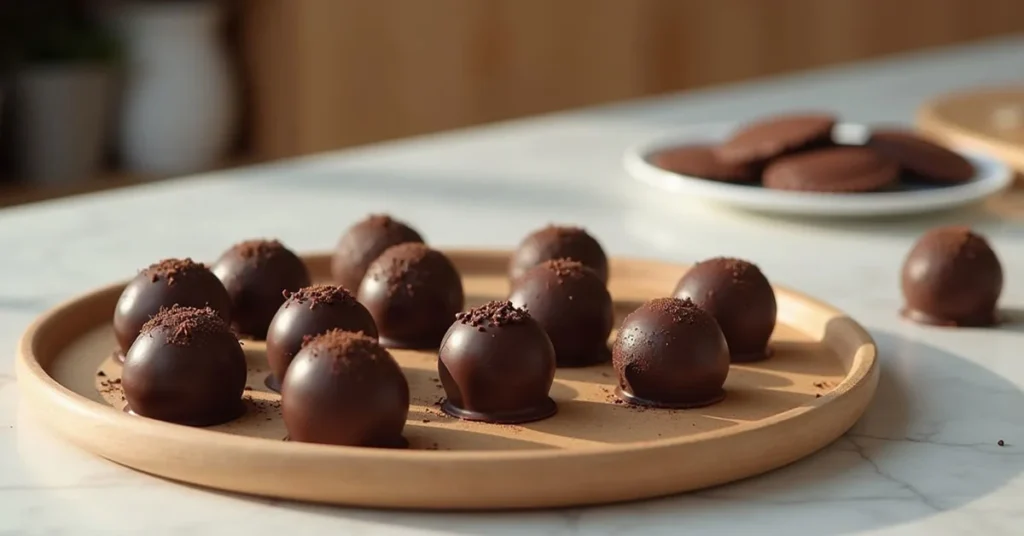
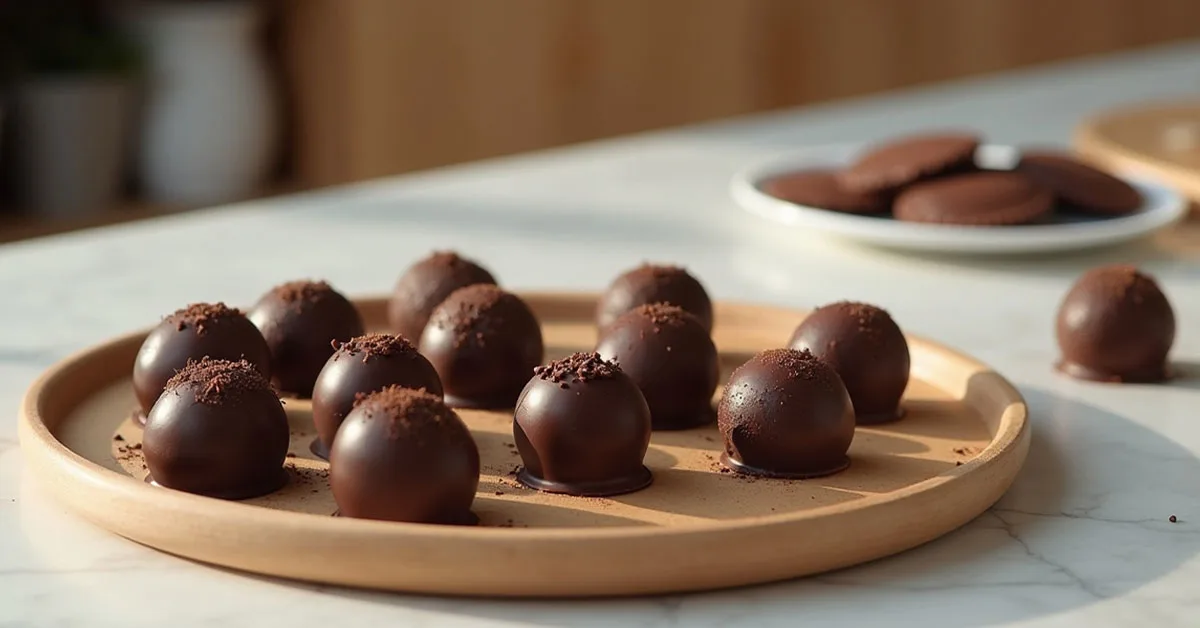

Dark Chocolate Truffles
Ingredients
Method
- Heat the cream. Warm the cream in a small saucepan over medium heat until small bubbles appear at the edge, then take it off the heat. Do not let it boil.
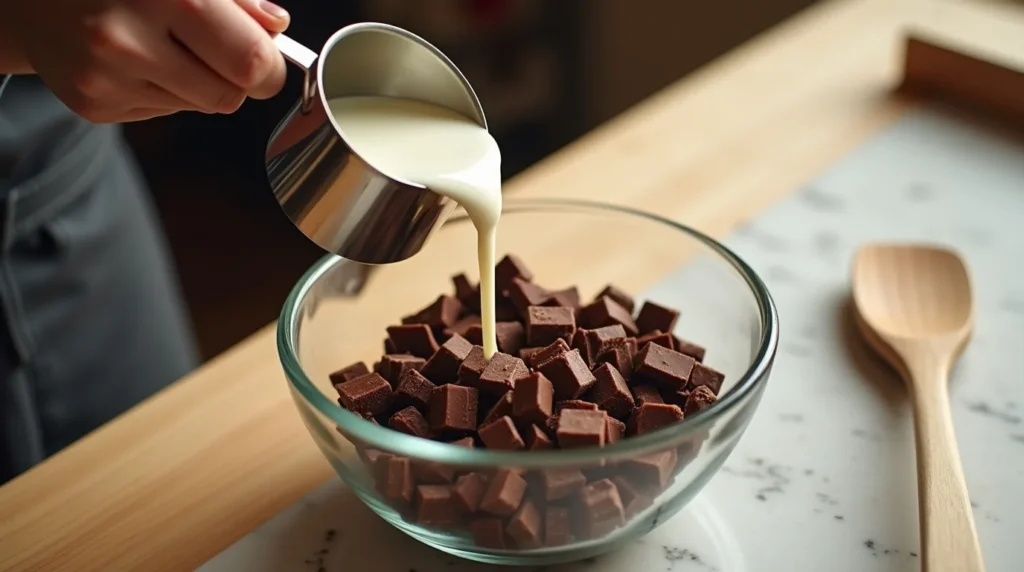
- Make the ganache. Pour the hot cream over the finely chopped chocolate in a heatproof bowl and leave it for 1 minute. Stir gently from the center outward until smooth and glossy, then stir in the butter and vanilla.
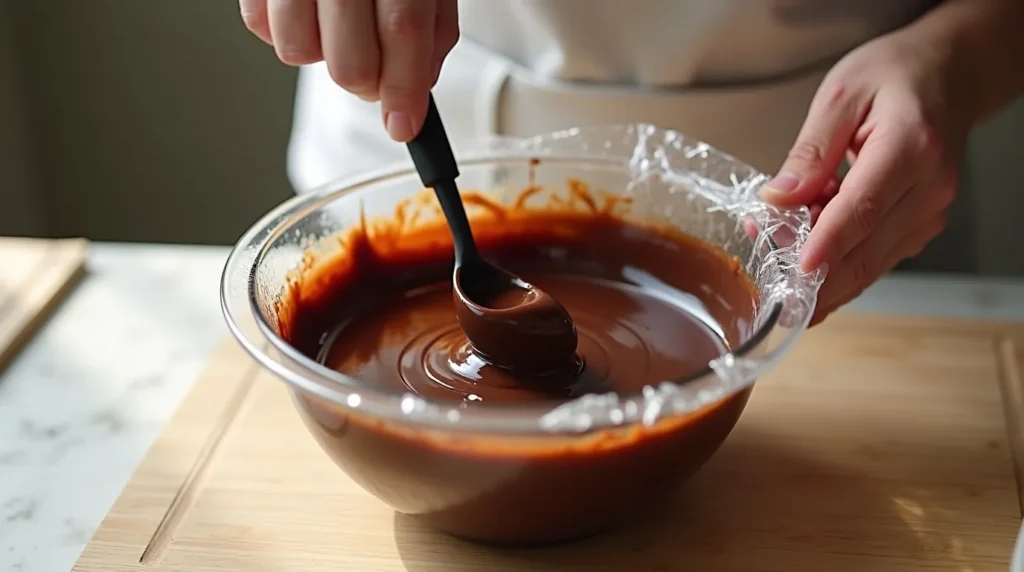
- Chill. Cover with plastic wrap touching the surface and refrigerate for 1 to 2 hours, until the ganache is firm enough to scoop, like soft clay.
- Scoop. Scoop portions of about 2 teaspoons onto a parchment-lined tray. If they feel soft, chill them for 10 minutes.
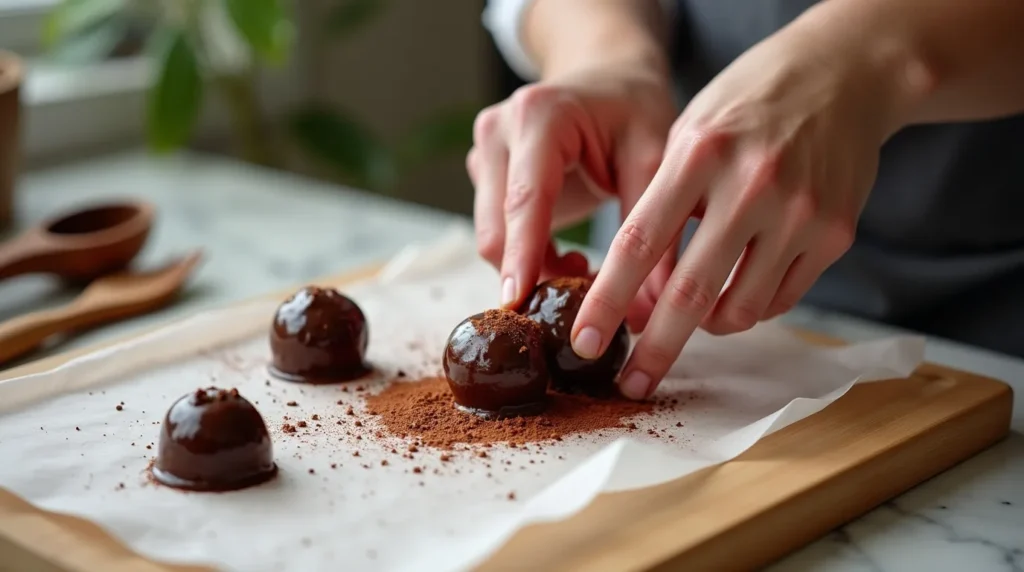
- Roll and coat. With cool, dry hands, roll each portion quickly into a ball, then roll it in the cocoa powder.
- Set. Chill the truffles for 10 minutes to firm up. Serve them after 15 minutes at room temperature.
Notes
What are dark chocolate truffles?
A chocolate truffle is a small ball of ganache, the mixture of chocolate and cream, coated in cocoa powder, nuts or chocolate. It takes its name from the truffle mushroom: the rough, irregular, cocoa-dusted balls look a little like the fungus. You can read more about the different styles on Wikipedia’s chocolate truffle page.
These dark chocolate truffles are the French style: soft ganache rolled by hand and coated in cocoa, with no shell. They are different from chocolate bonbons, which have a molded shell of tempered chocolate around the filling. They also have nothing to do with truffle butter made from the mushroom; for a chocolate spread with a similar name, see the chocolate truffle butter.
Dark chocolate gives the most balanced truffle: the cocoa flavor is strong enough to stand up to the cream and butter, and the slight bitterness keeps each one from feeling too sweet.
Chocolate shops sell other styles too. Some truffles are dipped in tempered chocolate so they have a thin, crisp shell around the soft ganache; others are larger and egg-shaped with a firm coating. They all start from the same idea: a soft chocolate center that melts at body temperature, which is what makes a truffle feel so rich.
Why these dark chocolate truffles work
- A 2 to 1 ratio: 200 g of chocolate to 100 ml of cream makes a ganache that is soft enough to melt in the mouth but firm enough to roll once chilled. More cream gives a dipping sauce; less gives a crumbly ganache.
- Hot cream, not boiling: cream brought just to a simmer melts finely chopped chocolate gently. Boiling cream can overheat the chocolate and make the ganache split.
- A minute of rest before stirring: it lets all the chocolate soften, so a few gentle stirs are enough to make a smooth emulsion.
- A little butter: it makes the ganache smoother and silkier, and helps it melt cleanly on the tongue.
- Proper chilling: 1 to 2 hours in the fridge firms the ganache to the texture of soft clay, which is the easiest stage to scoop and roll.
- A cocoa coating: unsweetened cocoa sticks to the slightly tacky surface, keeps the truffles from sticking to each other and balances their sweetness.
Ingredients and substitutions
Five ingredients make dark chocolate truffles, so the quality of the chocolate shows more than in almost any other recipe.
- Dark chocolate (200 g, 7 oz): 60–70% cocoa, from a good bar rather than chips, which contain less cocoa butter and melt less smoothly. Above 70%, the ganache gets firmer and slightly bitter; add 10 ml more cream.
- Heavy cream (100 ml, 3.5 fl oz): 35–36% fat. Lighter creams give a softer ganache that is hard to roll.
- Unsalted butter (25 g, 2 tablespoons): softened, stirred in once the ganache is smooth.
- Vanilla extract (1 teaspoon): or 1 tablespoon of a liqueur such as orange liqueur, rum or whisky.
- Unsweetened cocoa powder (20 g, 3 tablespoons): for rolling. Dutch-processed cocoa gives a darker color and a milder taste.
Taste a square of the chocolate on its own before you start. If you would not enjoy eating it plain, it will not make good truffles, because the ganache keeps every note of the chocolate, good or bad.
Chocolate-to-cream ratios
If you want to use another chocolate, change the amount of cream, because milk and white chocolate contain less cocoa solids and set softer.
| Chocolate | Chocolate | Cream | Ratio by weight |
|---|---|---|---|
| Dark, 60–70% | 200 g | 100 ml | 2 to 1 |
| Dark, above 70% | 200 g | 110 ml | about 1.8 to 1 |
| Milk chocolate | 200 g | 80 ml | 2.5 to 1 |
| White chocolate | 200 g | 65 ml | 3 to 1 |
Equipment
- Small saucepan: or a microwave-safe jug, to heat the cream.
- Heatproof bowl: glass or stainless steel, to melt the chocolate in the hot cream.
- Silicone spatula: to stir the ganache without adding air.
- Small cookie scoop or two teaspoons: a scoop of about 2 teaspoons gives even truffles of about 16 g.
- Tray lined with parchment paper: to hold the scooped and rolled truffles.
- Shallow bowl: for the cocoa powder or other coating.
No thermometer is needed. Unlike tempering, ganache only asks you to avoid overheating the chocolate, and the hot-cream method takes care of that on its own.
How to make dark chocolate truffles: tips for smooth, round truffles
The method is short, but each step has a detail that makes the difference.
- Chop the chocolate finely. Small, even pieces melt completely in the hot cream without any need for extra heat.
- Heat the cream until small bubbles appear at the edge. Then take it off the heat straight away.
- Stir from the center outward. The emulsion forms in the middle first; small circles that widen gradually give a glossy, even ganache.
- Cover the ganache with plastic wrap touching its surface. This stops a skin from forming as it chills.
- Scoop all the ganache first, then roll. Scooping is quick; rolling is where the heat of your hands softens the ganache. Chill the scooped portions for 10 minutes before rolling if they feel soft.
- Roll with cool, dry hands. Rinse your hands in cold water and dry them well, or wear food-safe gloves, and roll each truffle for only a few seconds.
- Coat straight after rolling. The surface is still slightly tacky, so the cocoa sticks evenly.
Truffles are a good recipe to make with children. An adult can heat the cream and make the ganache; once it has chilled, rolling and coating the balls is the part children enjoy most, and the cocoa hides any uneven shapes.
A simple timeline
- 0:00 — chop the chocolate, heat the cream and make the ganache (15 minutes).
- 0:15 — cover and chill the ganache until scoopable (1 to 2 hours).
- 1:15 — scoop, roll and coat the truffles (15 minutes).
- 1:30 — chill them for 10 minutes to firm up, then serve or pack.
Common problems and how to fix them
| Problem | Likely cause | Fix |
|---|---|---|
| Ganache looks oily or split | Cream too hot, or stirred too hard | Add 1 tablespoon of warm cream and stir slowly, or use a stick blender |
| Ganache grainy | Chocolate overheated, or water got in | Blend with a stick blender while still warm; next time chop finely and keep it off the heat |
| Too soft to roll | Not chilled long enough, or too much cream | Chill another 30 minutes; next time use the 2 to 1 ratio |
| Too hard to scoop | Chilled too long | Leave it at room temperature for 15–20 minutes |
| Truffles melt while rolling | Warm hands, or a warm kitchen | Cool your hands in cold water, wear gloves and chill the portions first |
| Coating does not stick | Truffles too cold and dry | Let them sit for a few minutes, or roll them briefly between your palms |
| Cocoa turns damp in the fridge | Moisture from the ganache | Roll them in a little more cocoa just before serving |
Coating ideas
Cocoa is the classic, but any dry, fine coating works.
- Unsweetened cocoa powder: the traditional French finish, slightly bitter and dusty.
- Chopped nuts: finely chopped toasted hazelnuts, pistachios or almonds.
- Shredded coconut: unsweetened, for a lighter, chewy outside.
- Dipped in chocolate: for a crisp shell, dip the cold truffles in tempered dark chocolate; the tempering method is explained with the chocolate bonbons.
- Freeze-dried raspberries: crushed to a powder, for a bright pink, tart coating.
- Powdered sugar mixed with cocoa: half and half, for a softer, sweeter finish.
Flavor variations
Once the basic recipe works for you, flavor the cream or the ganache to make dark chocolate truffles of several kinds from one batch.
- Orange: warm the cream with the zest of one orange, leave it for 10 minutes, then strain and reheat it before pouring.
- Espresso: dissolve 1 teaspoon of instant coffee in the hot cream.
- Spiced: add ½ teaspoon of cinnamon and a pinch of chili powder to the chocolate.
- Sea salt: sprinkle a few flakes of salt on each truffle after coating.
- Mint: infuse a handful of fresh mint leaves in the cream for 15 minutes, then strain.
- Liqueur: replace the vanilla with 1–2 tablespoons of rum, whisky or orange liqueur, stirred in with the butter.
- Hazelnut: stir 2 tablespoons of hazelnut paste into the warm ganache and roll the truffles in chopped toasted hazelnuts.
- Raspberry: replace 30 ml of the cream with sieved raspberry purée and roll the truffles in crushed freeze-dried raspberries.
How to serve them
Take the truffles out of the fridge 15 to 20 minutes before serving, so the ganache softens and the flavor opens up. Two or three per person is plenty after a meal, with coffee, espresso or a glass of port or dessert wine.
For a gift, place each truffle in a small paper case and pack them in a rigid box with a note of the flavors, especially if they contain nuts or alcohol. Keep the box in the fridge until you give it.
For a party, make a truffle board: three or four coatings side by side, such as cocoa, pistachio, coconut and raspberry, so guests can see the choices at a glance. Serve them on a cold plate if the room is warm.
How to store dark chocolate truffles
- Fridge: up to 2 weeks in an airtight container. This is the best place for a cream ganache.
- Room temperature: up to 2 days in a cool room, below about 20 °C.
- Freezer: up to 3 months in an airtight container. Thaw them in the fridge overnight, then roll them again in cocoa.
The cream in the ganache is what limits their shelf life, so keep them cold and covered. Store different flavors in separate containers if one contains mint, coffee or alcohol, as the ganache picks up strong smells.
Leftover ganache does not go to waste: warm it gently and pour it over ice cream, or whisk 2 tablespoons into a mug of hot milk for a quick hot chocolate.
Dark chocolate truffles FAQ
Can I use milk chocolate instead of dark chocolate?
Yes, but reduce the cream to about 80 ml for 200 g of milk chocolate. Milk chocolate contains fewer cocoa solids, so the ganache sets softer and the truffles are sweeter.
Can I make dark chocolate truffles ahead of time?
Yes. Keep the rolled truffles in an airtight container in the fridge for up to 2 weeks, or freeze them for up to 3 months. Re-roll them in cocoa before serving.
Are these truffles gluten-free?
The ingredients are naturally gluten-free. Check the labels of the chocolate and cocoa if you need to avoid traces of gluten.
Why did my ganache split?
It was overheated or stirred too hard while hot. Add a tablespoon of warm cream and stir slowly, or use a stick blender, and it will come back together.
Can I make truffles without cream?
Yes. Use full-fat canned coconut cream in the same amount for a dairy-free version, and replace the butter with coconut oil.
How many calories are in one truffle?
Roughly 85 kcal per truffle by our estimate, for 20 truffles coated in cocoa.
How big should a truffle be?
About 2 teaspoons of ganache, or 15–16 g, which gives a truffle roughly 3 cm across. That size is one or two bites and rolls easily between your palms.
Why are my truffles not round?
The ganache was too soft or your hands were warm. Chill the scooped portions for 10 minutes and roll each one quickly; a slightly irregular shape is traditional and looks fine under cocoa.
What is the difference between truffles and bonbons?
A truffle is a ball of ganache coated in cocoa, nuts or chocolate. A bonbon has a molded shell of tempered chocolate around its filling.
More chocolate recipes to try
- Chocolate bonbons: the same ganache inside a molded chocolate shell.
- Chocolate ganache recipe: the right ratio for every use, from glaze to truffles.
- Chocolate truffle cake: a rich dark chocolate cake for celebrations.
Happy baking! — Hassoun