
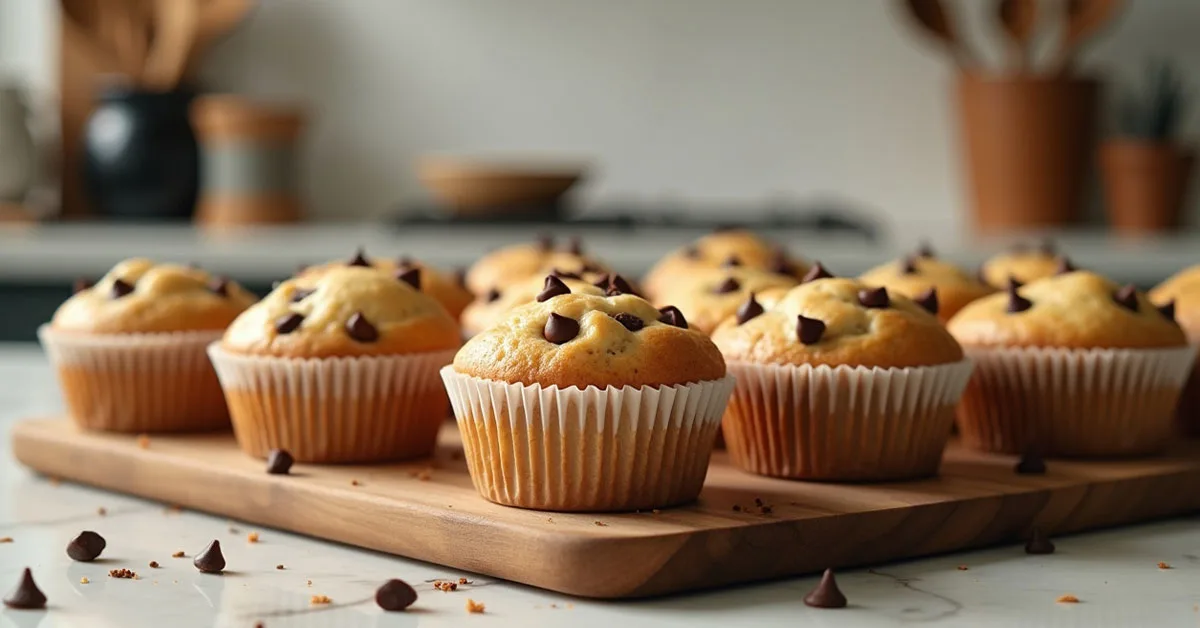
Chocolate chip muffins with a tall golden top, a soft tender crumb and chocolate in every bite are easier to make than most people expect. This recipe makes 12 muffins from one bowl of dry ingredients and one bowl of wet ingredients, with no mixer needed. It takes 10 minutes of preparation and 15 to 20 minutes in the oven, so the whole batch is ready in about 25 minutes, plus a short cooling time.
The method is the classic muffin method: mix the dry and wet ingredients separately, then combine them quickly. The recipe uses 260 g (1½ cups) of chocolate chips, which is generous, and a mix of milk and melted butter for moisture. Below you will find how each ingredient works, the mistakes that make muffins dense, and how to store them.
If you prefer a fruity version, try my banana chocolate chip muffins, which is a separate recipe built around ripe bananas.


Chocolate Chip Muffins
Ingredients
Method
- Prepare the oven and tin. Heat the oven to 190°C (375°F) with a rack in the centre. Line a 12-cup muffin tin with paper liners.
- Mix the dry ingredients. Whisk the flour, sugar, baking powder and salt in a large bowl.
- Mix the wet ingredients. In another bowl, whisk the eggs, milk, melted butter and vanilla until smooth.
- Combine. Pour the wet mixture into the dry ingredients. Fold with a spatula until the flour just disappears. A few lumps are fine.
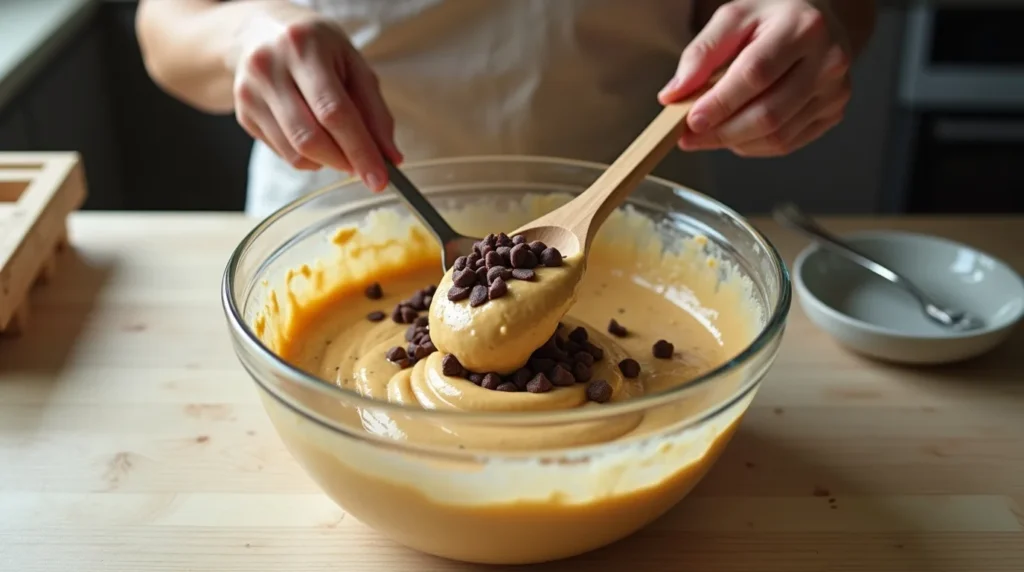
- Add the chocolate. Fold in the chocolate chips with two or three strokes.
- Fill the tin. Divide the batter between the 12 cups, filling each about three-quarters full. Press a few extra chips on top.
- Bake. Bake for 15 to 20 minutes, checking at 15, until the tops are golden and a toothpick comes out with a few moist crumbs.
- Cool. Leave the muffins in the tin for 5 minutes, then move them to a wire rack for at least 10 more minutes.
Notes
What Makes Bakery-Style Chocolate Chip Muffins Different
Bakery-style muffins are taller, larger and more generously filled than the small, plain muffins many home recipes produce. They have a domed, cracked top, a moist crumb and a lot of chocolate. The muffin itself is a quick bread, which means it rises with baking powder rather than yeast, so there is no proofing and no kneading.
A muffin also differs from a cupcake. Cupcakes usually start by creaming butter and sugar, which gives a fine, cake-like crumb that suits frosting. Muffins use the muffin method instead, with melted butter and liquid stirred into flour. The batter is thicker and rougher, the crumb is a little more open, and there is no frosting to hide behind.
Why These Chocolate Chip Muffins Work
- The muffin method. Stirring the wet ingredients into the dry ones only until combined limits gluten development, so the muffins stay tender instead of tough.
- Melted butter and milk. Melted butter coats the flour and keeps the crumb soft, while milk hydrates the batter and helps it bake evenly.
- Baking powder as the only raising agent. One tablespoon is enough to lift 240 g of flour, and there is no acidic ingredient that would call for baking soda.
- A generous amount of chips. With 260 g of chocolate chips for 12 muffins, nearly every bite has chocolate.
- Moderate sugar. 100 g of sugar sweetens the batter without making it heavy, because the chocolate chips add their own sweetness.
Choosing the Right Chocolate Chips
The chips are the main flavour in these muffins, so the type matters. Semi-sweet chips with around 45 to 55 per cent cocoa are the safe middle ground: they taste clearly of chocolate and hold their shape in the oven. Chips contain a little stabiliser, which stops them from melting into the batter and leaves recognisable pieces.
- Semi-sweet chips. Balanced and reliable, and the choice I would use for a first batch.
- Dark chips. Less sweet, with a stronger cocoa flavour. They suit people who find bakery muffins too sugary.
- Milk chocolate chips. Sweeter and softer. Consider reducing the sugar by a tablespoon if you use them, though I have not tested that change.
- Chopped bar chocolate. It melts more fully and makes irregular pockets, but it can streak the batter, so fold gently.
Chocolate Chip Muffins Ingredients and What Each One Does
Every ingredient has a clear job. The exact quantities are in the recipe card above, and I give the weights in grams because they are more accurate than cups.
- All-purpose flour (240 g). It gives the muffins their structure. Spoon it into the cup and level it off, or weigh it, because packed flour makes dry muffins.
- Granulated sugar (100 g). It sweetens the batter and helps the tops brown.
- Baking powder (1 tablespoon). It makes the muffins rise. If your tin has been open for more than six months, check it by stirring a spoonful into hot water: it should fizz at once.
- Salt (½ teaspoon). It sharpens the flavour of the chocolate and the vanilla.
- Milk (240 ml). Whole milk gives the richest result. Use it at room temperature so it does not make the melted butter set into clumps.
- Melted butter (115 g). Let it cool for a few minutes before mixing. You can use a neutral oil instead, which keeps muffins soft for a little longer, but you lose the buttery flavour.
- Eggs (2 large). They bind the batter and add richness. Use them at room temperature.
- Vanilla extract (2 teaspoons). It rounds out the flavour.
- Chocolate chips (260 g). Semi-sweet chips are the standard choice. Dark chips give a deeper flavour, and milk chips a sweeter one.
Ingredient Substitutions
Sometimes the pantry does not match the list. These swaps follow common baking logic, but I have not tested each one on this site, so check the batter and the bake time.
- Milk. Oat or soy milk can replace dairy milk in the same amount.
- Sugar. Light brown sugar adds a caramel note and a little more moisture.
- Flour. I have not tested whole wheat flour, which usually makes a denser muffin, so stay with all-purpose flour for the best result.
- Butter. Melted coconut oil can replace it, at the same weight.
Equipment You Need
- A 12-cup muffin tin. A standard tin, with cups of about 120 ml each.
- Paper liners or grease. Liners make cleaning easy. If you skip them, grease each cup well.
- Two mixing bowls. One for dry ingredients and one for wet ingredients.
- A whisk and a spatula. Use the whisk for the wet mixture and the spatula for folding.
- A cookie scoop. It fills the cups evenly and keeps the tops neat.
- A wire rack. It lets the muffins cool without steaming in the tin.
How to Make Chocolate Chip Muffins: Tips That Matter
The steps are in the recipe card. These points make the difference between a tall, tender muffin and a flat, dense one.

- Whisk the dry ingredients well. This spreads the baking powder evenly, so every muffin rises the same amount.
- Combine the wet ingredients first. Whisk the eggs, milk, butter and vanilla until smooth, so you need fewer strokes when you mix everything together.
- Stop mixing early. Fold with a spatula until you no longer see dry flour. A few small lumps are fine. Overmixing builds gluten and gives tough, tunnelled muffins.
- Fold in the chocolate chips last. Add them in the final few strokes so they spread through the batter without extra mixing.
- Fill the cups about three-quarters full. This leaves room for the batter to rise and form a dome without overflowing.
- Press a few extra chips on top. They melt slightly in the oven and give the muffins a bakery look.
- Bake in the centre of the oven. Bake at 190°C (375°F) for 15 to 20 minutes, and start checking at 15. The tops should be golden and a toothpick should come out with a few moist crumbs.
- Cool in the tin for 5 minutes. Then move the muffins to a wire rack. They continue to set as they cool, so wait at least 10 minutes before eating.
How to Get a Tall, Domed Top
The domed top comes from batter that is thick enough to hold its shape and an oven that is fully preheated. Several habits help.
- Preheat fully. A hot oven sets the outside of the batter as the centre rises.
- Keep the batter thick. Do not add extra milk. The batter should drop heavily from the spatula.
- Use a scoop. A rounded scoop, filling the cup about three-quarters full, gives a more even dome than spooning.
- Try a hot start. Some bakers begin at 220°C (425°F) for 5 minutes, then lower the oven to 190°C (375°F) to finish. I have not tested this method with this recipe, so watch the first batch closely.

Common Muffin Problems and How to Fix Them
Most muffin problems come from mixing, measuring and oven temperature. Match what you see with the likely cause below.
| Problem | Cause | Fix |
|---|---|---|
| Dense, heavy muffins | Batter overmixed, or too much flour | Fold only until the flour disappears, and spoon and level the flour or weigh it. |
| Tough, rubbery crumb | Too much gluten development | Mix with a spatula, not a mixer, and stop while the batter is still a little lumpy. |
| Flat tops | Old baking powder, or cups underfilled | Check the baking powder, and fill the cups about three-quarters full. |
| Chocolate chips sink | Thin batter or warm chips | Keep the chips cold and fold them in at the very end. |
| Dry muffins | Overbaked, or too much flour | Check at 15 minutes and take them out as soon as a toothpick comes out with moist crumbs. |
| Muffins stick to the liners | Cooled in the tin, or liners not greased | Move them to a rack after 5 minutes, and use paper liners with a light coating of oil if they cling. |
| Pale tops | Oven too cool, or tin on a low shelf | Check the oven temperature with a thermometer and bake in the centre. |
| Burnt bottoms | Dark tin, or shelf too low | Move the tin up one shelf, or use a lighter-coloured tin. |
To judge doneness, press the top of a muffin lightly: it should spring back. The edges pull away from the liner a little, and a toothpick pushed through a part without chips comes out with only a few moist crumbs. Melted chocolate on the toothpick does not mean the muffin is raw.
Flavour Variations
These are common adjustments to the base recipe. I have not tested each one on this site, so treat them as starting points and taste as you go.
- Double chocolate. Replace 30 g of the flour with unsweetened cocoa powder. I have not tested this exact ratio, so the muffins may bake a little drier.
- Dark chocolate chunks. Replace the chips with 260 g of roughly chopped dark chocolate for larger pockets of melted chocolate.
- White and dark. Use 130 g of white chocolate chips and 130 g of dark chocolate chips.
- Orange. Add the finely grated zest of 1 orange to the wet ingredients.
- Nuts. Fold in 60 g of chopped toasted walnuts or pecans with the chips.
- Mini muffins. Use a mini tin and shorten the baking time. I have not tested the timing, so start checking after about 10 minutes.
How to Serve These Muffins
- Warm from the oven. Wait 10 minutes after baking, so the chocolate stays soft but the crumb has set.
- With coffee or milk. They suit breakfast or an afternoon snack.
- With butter. Split a muffin and spread a thin layer of butter on the cut side.
- As a gift. Pack them in a box lined with baking paper, once they are completely cool.
- For brunch. Serve them with fresh fruit and yoghurt for a balanced plate.
How to Store Chocolate Chip Muffins
- Room temperature: keep them in an airtight container for up to 2 days. Put a sheet of paper towel at the bottom to absorb moisture.
- Refrigerator: I do not recommend it, because the cold dries out the crumb faster.
- Freezer: freeze cooled muffins in a freezer bag for up to 3 months, which is the usual guideline for baked goods. I have not tested this batch for that long.
- Reheating: warm a muffin in the microwave for 15 to 20 seconds, or in a 160°C (320°F) oven for 5 to 8 minutes.
- Make ahead: mix the dry ingredients the night before, and combine them with the wet ingredients just before baking.
Chocolate Chip Muffins FAQ
Can I make chocolate chip muffins ahead of time?
Yes. Bake them a day early and store them in an airtight container at room temperature. You can also freeze them, then warm them in a low oven before serving. Do not mix the batter far in advance, because the baking powder starts to lose its power once it is wet.
Why are my chocolate chip muffins dense?
Dense muffins are usually caused by overmixing, too much flour or old baking powder. Fold the batter only until the dry flour disappears, measure the flour by weight, and check that the baking powder still fizzes in hot water.
How do I get extra moist muffins?
Do not overbake them, and measure the flour carefully. Melted butter and whole milk help, and a toothpick should come out with a few moist crumbs rather than completely clean.
Can I use oil instead of butter?
Yes, you can use the same weight of a neutral oil. The muffins stay soft for longer, but they lose some of the buttery flavour. I have not tested this swap on this recipe.
What chocolate is best?
Semi-sweet chips are the standard choice. Dark chips give a less sweet muffin, and milk chocolate chips make it sweeter. Chocolate chunks create larger melted pockets.
Can I add nuts or fruit?
Yes. Fold in 60 g of chopped nuts, or a small amount of berries. Berries release juice, so keep the quantity modest, and I have not tested the exact amounts here.
More Chocolate Chip Recipes to Try
- Chocolate chip banana bread for a moist loaf.
- Chocolate chip cupcakes for a frosted treat.
- Chocolate chip cake for a soft, buttery cake.
Happy baking! — Hassoun