
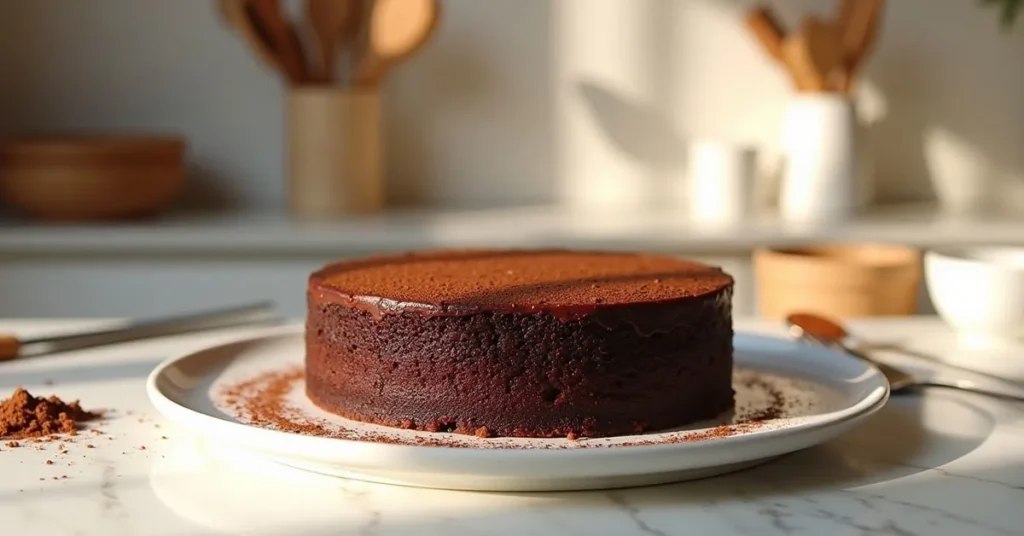
Moist Chocolate Cake Recipe: Easy Homemade Layer Cake
This moist chocolate cake is a two-layer cake with a tender, dark crumb that stays soft for days. It is made with oil, buttermilk and a cup of hot water or hot coffee, plus both cocoa powder and melted dark chocolate. The batter is mixed in two bowls with a whisk, so you need no mixer, no creaming and no special skill.
The recipe makes two 9-inch (23 cm) layers and cuts into 12 slices. Preparation takes about 20 minutes, baking takes 35, and the layers need about 40 minutes to cool before you frost them, so plan on roughly an hour and a half from start to a finished cake. The batter is thin, which surprises many people, but that thinness is exactly what makes the cake moist.
Below you will find why this cake stays moist, what each ingredient does, how to avoid the usual problems, and how to frost and store it. For a topping, my German chocolate cake frosting is a classic partner, and for cupcakes see my chocolate cupcakes.
You might also like my gluten free chocolate cake, a rich flourless chocolate cake made with no flour.
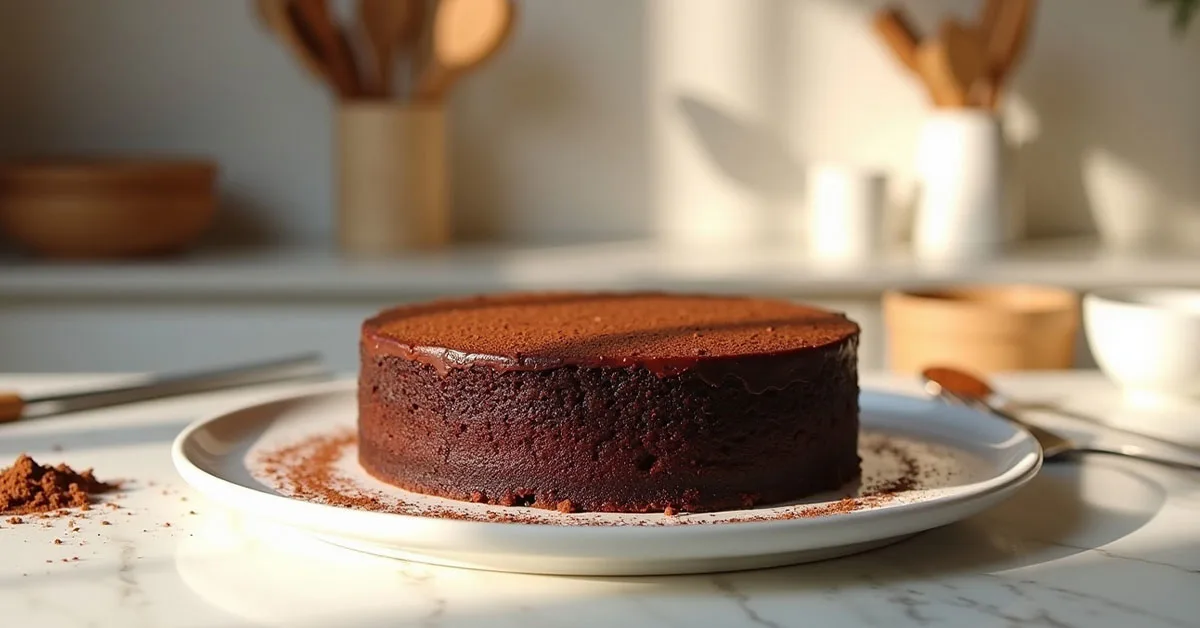

Moist Chocolate Cake
Ingredients
Method
- Prepare the pans. Heat the oven to 180°C (350°F) with a rack in the middle. Grease two 9-inch (23 cm) round cake pans and line the bases with parchment paper.
- Mix the dry ingredients. In a large bowl, whisk together the flour, cocoa powder, sugar, baking powder, baking soda and salt, breaking up any cocoa lumps.
- Mix the wet ingredients. In a second bowl, whisk the eggs, buttermilk, oil and vanilla until smooth.
- Combine. Pour the wet mixture into the dry ingredients and whisk just until combined. Do not overmix.
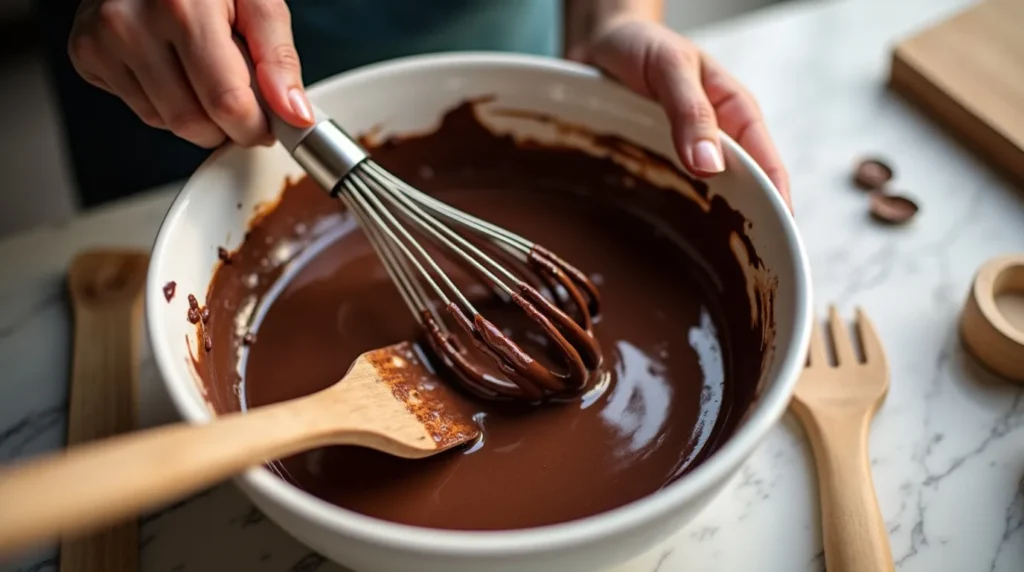
- Add the hot liquid. Slowly whisk in the hot water or coffee. The batter will become very thin, which is correct.
- Add the chocolate. Fold in the melted dark chocolate until the batter is smooth.
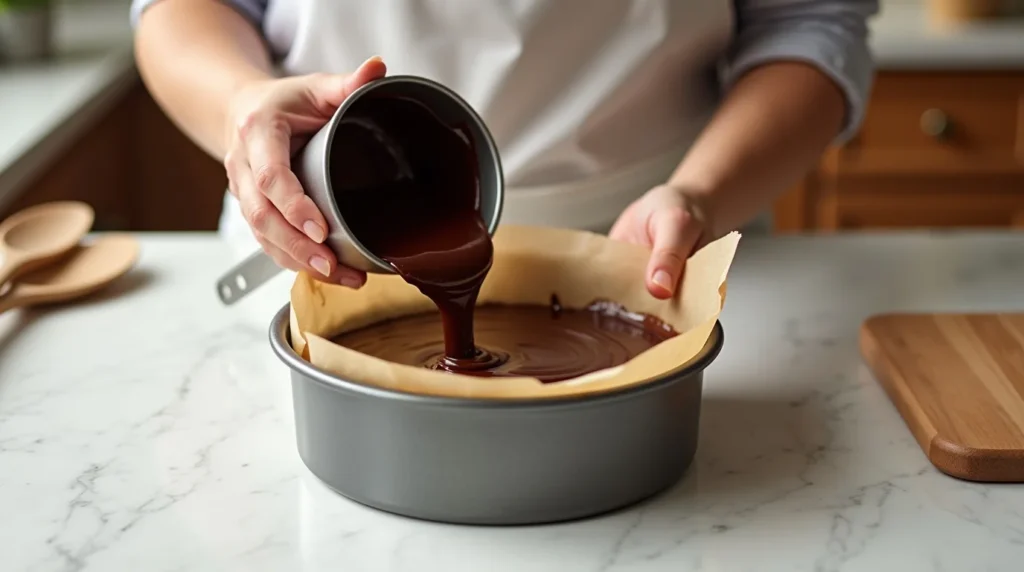
- Bake. Divide the batter evenly between the pans (weigh them if you can). Bake for 30 to 35 minutes, until a toothpick in the centre comes out with a few moist crumbs.
- Cool. Leave the layers in the pans for 10 minutes, then turn them out onto a wire rack and cool completely, about 30 minutes, before frosting.
Notes
What Makes a Moist Chocolate Cake?
A moist chocolate cake depends on three things: the right fat, enough liquid and gentle mixing. Oil stays liquid at room temperature, so a cake made with oil feels softer and more moist than one made with butter once it has cooled. Buttermilk adds liquid and acid, which tenderises the crumb, and the cup of hot water makes the batter thin enough to bake into a fine, even texture.
Cocoa powder alone can taste a little flat and dry out the crumb, so this recipe adds 100 g of melted dark chocolate as well. The chocolate brings cocoa butter, which keeps the crumb rich, and a rounder flavour. The Wikipedia entry on chocolate cake explains how many different styles exist, from sponge to flourless.
The method here is sometimes called a hot water cake, a wet-batter approach used in many classic American chocolate cakes. The batter looks almost like a thick drink, and that is deliberate: a high proportion of liquid to flour produces a cake with a fine, even crumb, and the hot liquid dissolves the sugar and cocoa fully, so you do not get grainy pockets.
Why This Moist Chocolate Cake Recipe Works
- Oil instead of butter. Oil coats the flour and stays fluid, so the crumb remains soft after the cake cools and even after a day or two in the cupboard.
- Hot water or coffee. Hot liquid helps the cocoa release its flavour and loosens the batter. Coffee deepens the chocolate without making the cake taste of coffee.
- Buttermilk and baking soda. The acid in the buttermilk reacts with the baking soda, which gives lift and a tender crumb. The baking powder adds a second, steadier rise.
- Melted chocolate. It adds fat and a deeper flavour than cocoa alone, so the cake tastes like chocolate rather than just cocoa.
Together, these choices explain the result: a tender, dark crumb that holds together when you slice it, and does not dry out by the second day. The method is forgiving, but the oven temperature and the measuring are worth getting right.
Moist Chocolate Cake Ingredients and What Each One Does
Every ingredient has a clear job. The exact quantities, in grams and cups, are in the recipe card above.
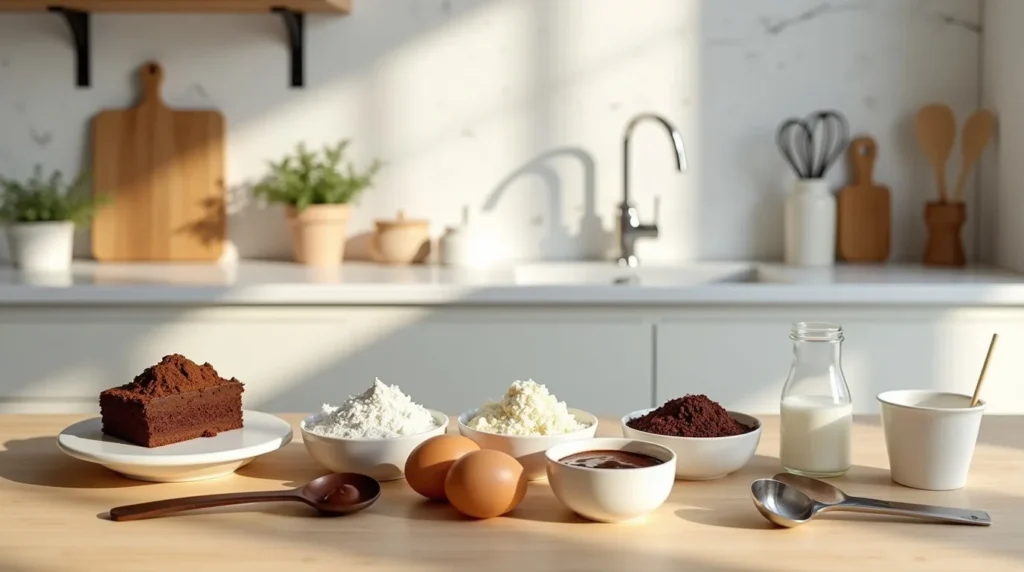
- All-purpose flour (220 g). It gives the cake its structure. Weigh it if you can, because scooping packs the flour and makes a drier cake.
- Cocoa powder (75 g) and dark chocolate (100 g). Use natural unsweetened cocoa, which works with the baking soda. For the chocolate, choose a bar with 55 to 70 per cent cocoa and melt it gently.
- Sugar (300 g). It sweetens and keeps the cake moist. Reducing it by more than a little will change the texture, so I would not.
- Eggs (2 large, at room temperature). They bind and add structure. Cold eggs mix less evenly into the oil and buttermilk.
- Vegetable oil (120 ml). Use a neutral oil such as sunflower or rapeseed, so the chocolate flavour stays clear.
- Buttermilk (240 ml). If you have none, stir 1 tablespoon of lemon juice or white vinegar into 240 ml of milk and leave it for 5 minutes. It will not be identical, but it works.
- Hot water or hot coffee (240 ml). Strong brewed coffee gives the deepest flavour. Use it hot, not boiling hard.
- Baking powder (2 teaspoons), baking soda (1 teaspoon), salt (½ teaspoon) and vanilla (1 teaspoon). The leaveners lift the cake, the salt sharpens the chocolate and the vanilla rounds it out.
If you need to swap something, the easiest changes are the coffee, the chocolate and the oil. Hot water instead of coffee gives a milder, slightly sweeter cake. Chocolate chips can replace the bar, but they are made to hold their shape and melt less smoothly, so chop a bar if you can. Olive oil is possible, though its flavour can come through, so I would stay with a neutral oil.
Equipment You Need
- Two 9-inch (23 cm) round cake pans. Each should be at least 4 cm (1½ in) deep, because the batter rises well.
- Parchment paper. Line the base of each pan, so the layers turn out cleanly.
- Two large bowls and a whisk. One for the dry ingredients and one for the wet.
- A kitchen scale. It helps you divide the batter evenly between the pans, so both layers bake at the same pace.
- A wire rack and a toothpick. The rack cools the layers, and the toothpick shows when they are done.
- An oven thermometer (optional). It is inexpensive and tells you whether your oven runs hot or cool, which is the most common reason for a sunken or domed cake.
How to Bake a Moist Chocolate Cake: Tips That Matter
The steps are in the recipe card. These points decide whether the cake turns out tender and level or dry and domed.
- Heat the oven first. A hot oven domes the layers, while a cool one makes them sink. An oven thermometer shows the true temperature.
- Line the pans. Grease the sides, and put a round of parchment on the base. Chocolate cake sticks easily, and the paper prevents torn layers.
- Whisk the dry ingredients well. Cocoa clumps, so break the lumps up, or sift if you prefer. Lumps of cocoa leave dry streaks in the finished cake.
- Add the wet ingredients in one go. Pour them into the dry ingredients and whisk only until combined. Extra mixing develops gluten and makes the crumb tough.
- Expect a thin batter. After the hot water goes in, the batter looks runny. This is correct. It bakes into a moist, fine crumb.
- Divide the batter evenly. Weigh each pan. Layers of equal weight bake at the same pace and stack neatly.
- Bake until a toothpick shows a few moist crumbs. Start checking at 30 minutes. A clean toothpick often means the cake is slightly overbaked.
- Cool before you frost. Leave the layers in the pans for 10 minutes, then turn them onto a rack for about 30 minutes. Warm layers melt frosting and may crack when you handle them.
- Level the layers. If a layer has domed, trim the top with a long serrated knife once it is fully cool. Flat layers stack neatly and make frosting much easier.
- Chill the cake briefly. A cake that has had 15 minutes in the refrigerator is firmer, so it cuts into cleaner slices and takes frosting without crumbs.
Common Moist Chocolate Cake Problems and How to Fix Them
Most problems come down to oven temperature, measuring or mixing. Match what you see with the likely cause below.
| Problem | Cause | Fix |
|---|---|---|
| Dry, crumbly cake | Overbaking, or too much flour from scooping | Weigh the flour and start checking at 30 minutes. |
| Cake sinks in the middle | Oven door opened early, or an underbaked centre | Keep the door shut for 20 minutes and bake until a toothpick shows a few moist crumbs. |
| Domed, cracked layers | Oven too hot | Check the oven with a thermometer and lower the temperature by 10°C (20°F). |
| Dense, heavy crumb | Overmixing, or old leavening | Whisk only until combined, and use fresh baking powder and baking soda. |
| Bitter or soapy taste | Too much baking soda, or the wrong cocoa | Measure the soda level and use natural unsweetened cocoa. |
| Layers stick to the pan | Pans not lined | Grease the sides and line the base with parchment. |
| Uneven layers | Batter divided by eye | Weigh the batter into each pan. |
If your cake shows a problem that is not in the table, the cause is almost always one of three things: the oven temperature, the amount of flour or the mixing time. Change one at a time, and note what you changed, so you can tell which one made the difference.
Moist Chocolate Cake Variations
These are standard adjustments of the base recipe. I have not tested each one on this site, so treat the quantities as starting points and check the cake with a toothpick.
- Sheet cake. Bake the batter in a 23 x 33 cm (9 x 13 in) pan for about 35 to 40 minutes. This is the easiest way to serve a crowd.
- Cupcakes. Fill lined muffin cups about two thirds full and bake for roughly 18 to 22 minutes. For a tested cupcake recipe, see my chocolate cupcakes.
- Mocha. Use strong hot coffee for the hot liquid, and add 1 teaspoon of instant espresso powder to the dry ingredients.
- Layered and filled. Fill the layers with whipped cream or raspberry jam. For a showpiece, see the pistachio and chocolate filling in my Dubai chocolate cake.
- Mousse-topped. Top a single layer with a light chocolate mousse, as in my chocolate mousse cake.
- Orange. Add the grated zest of 1 orange to the sugar for a bright note that suits dark chocolate.
How to Frost and Serve Moist Chocolate Cake
Frost only fully cooled layers. A few easy options:
- Chocolate ganache. Pour 250 ml of hot cream over 250 g of chopped chocolate, stir until smooth and cool until it thickens enough to spread.
- Coconut and pecan frosting. Fill and top the layers with my German chocolate cake frosting.
- Whipped cream. Whip cold cream to soft peaks and spread it between the layers just before serving.
- Plain. A dusting of powdered sugar is enough if you want a simple finish.
To assemble the cake, set the first layer on a plate with its flat side up, spread a generous layer of frosting, and add the second layer upside down so the flat base forms the top. Spread the rest over the top, and the sides too if you like. A hot, dry knife smooths the surface of a ganache.
How to Store Moist Chocolate Cake
- Room temperature: keep an unfrosted or ganache-covered cake in an airtight container for up to 3 days.
- Refrigerator: cakes with whipped cream or cream-based fillings keep for up to 3 days. Let slices stand for 30 minutes before serving.
- Freezer: wrap each unfrosted layer in plastic and then foil, and freeze for up to 3 months. Thaw them still wrapped at room temperature.
- Make ahead: bake the layers a day early and frost them on the day you serve the cake.
Moist Chocolate Cake FAQ
Can I substitute ingredients in this moist chocolate cake recipe?
Yes, within limits. You can replace the buttermilk with milk and lemon juice, and the hot water with hot coffee. Replacing the oil with melted butter works, but the cake will be slightly less moist. I have not tested egg or gluten substitutions in this recipe.
Can I make this chocolate cake without eggs?
I have not tested an egg-free version. Eggs give structure to a two-layer cake, so I would not guess at a substitute. If you need an egg-free chocolate cake, look for a recipe that was developed without eggs.
Can I make this cake ahead of time?
Yes. Bake the layers a day early, cool them completely and wrap them well. Frost on the day you serve. Unfrosted layers also freeze for up to 3 months.
What is the difference between using cocoa powder and melted chocolate?
Cocoa powder gives a dry, intense chocolate flavour, while melted chocolate adds fat and a rounder, smoother taste. This recipe uses both, which is why the cake tastes rich and stays moist.
How do I prevent my moist chocolate cake from sinking in the middle?
Keep the oven door shut for the first 20 minutes, measure the baking powder and soda level, and bake until a toothpick comes out with a few moist crumbs. A thin batter is normal here, so do not add more flour.
How can I enhance the chocolate flavour even more?
Use hot coffee instead of water, choose a good dark chocolate and add a pinch of salt. Do not skip the cocoa or the melted chocolate, because each adds a different layer of flavour.
More Chocolate Recipes to Try
- Lemon bundt cake for a moist cake with a dark chocolate glaze.
- Mini cupcakes for soft chocolate bites that bake in about 12 minutes.
- Chocolate brownie recipe for a classic fudgy square.
Happy baking! — Hassoun