
These white chocolate chip cookies have crisp golden edges, soft chewy centers and pockets of creamy white chocolate in every bite. The dough is mixed in one bowl with a hand mixer or a wooden spoon, needs no chilling and bakes in about 12 minutes.
The recipe makes 24 medium cookies, about 30 g of dough each, in a little over 30 minutes from the first step to the cooling rack. Weigh the flour if you can: it is the most reliable way to get the same thickness and chew every time you bake them.
Below the recipe card you will find why the ratios work, how white chocolate behaves differently from dark chocolate in the oven, a table of fixes for flat or cakey cookies, flavor variations and storage times.
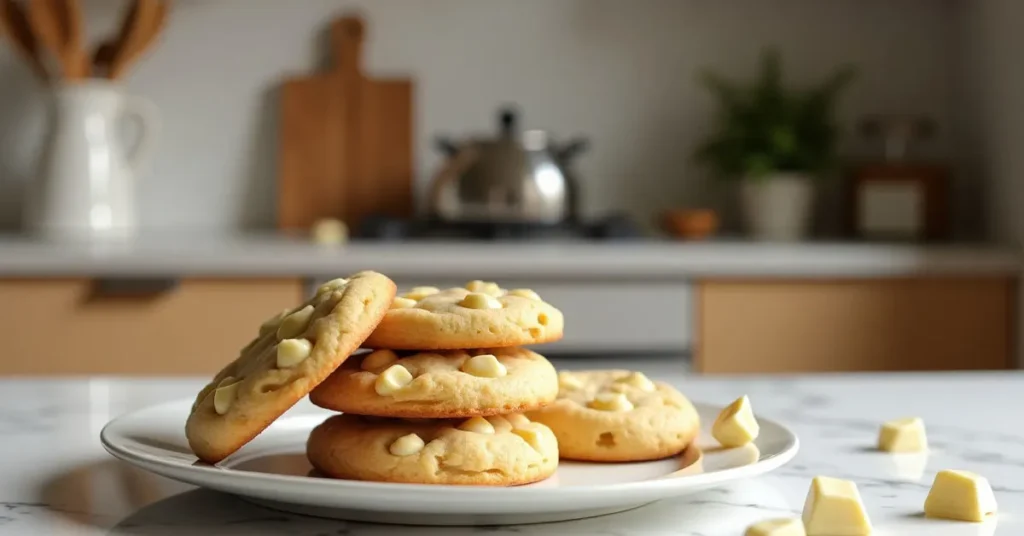
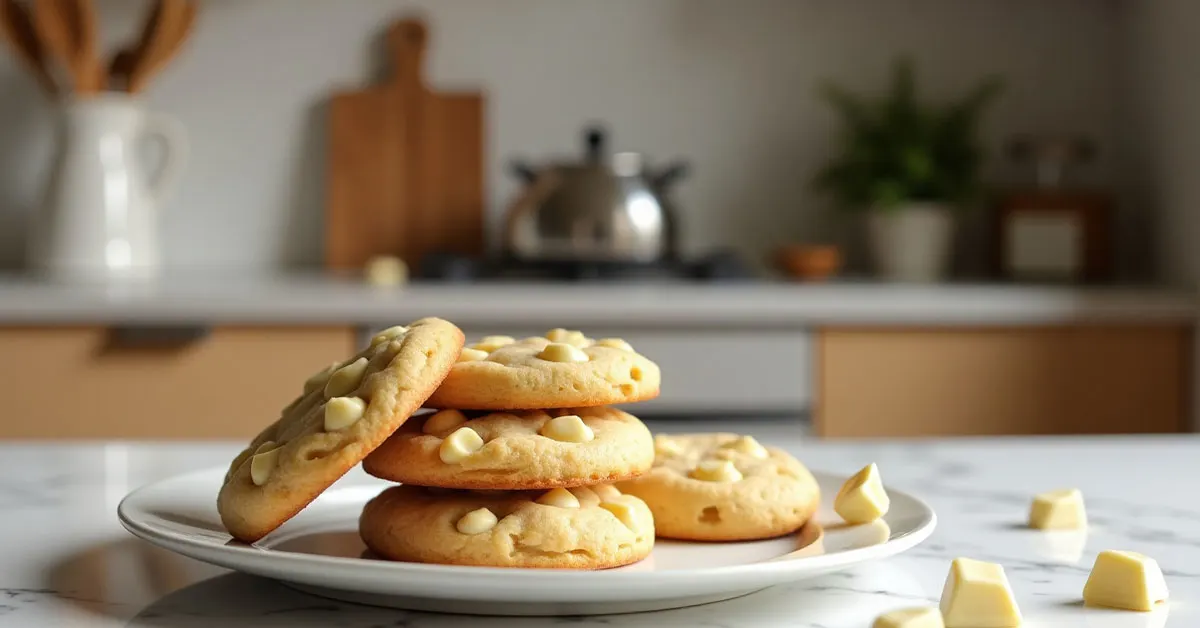

White chocolate chip cookies
Ingredients
Method
- Preheat. Heat the oven to 180 °C (350 °F), or 160 °C fan, and line two baking sheets with parchment paper.
- Cream. Beat the butter with the brown and granulated sugars for 2–3 minutes, until paler and fluffy.
- Add the egg. Beat in the egg and vanilla until smooth.
- Add the dry ingredients. Whisk the flour, baking soda and salt together, then stir them into the butter mixture just until no dry flour remains.
- Add the chips. Fold in the white chocolate chips, keeping a handful back for the tops.
- Shape. Scoop balls of about 1½ tablespoons (30 g), 5 cm apart, 12 per sheet. Press a few chips onto each.
- Bake. Bake one sheet at a time for 10–12 minutes, until the edges are golden and the centers still look soft. To bake both at once, use the upper and lower thirds of the oven and swap halfway.
- Cool. Leave on the tray for 5 minutes, then move to a wire rack.
Notes
What makes white chocolate cookies different?
White chocolate is made from cocoa butter, sugar and milk solids, with no cocoa solids at all, which is why it is ivory rather than brown. You can read more about how it is made on Wikipedia’s white chocolate page. In the United States and the European Union, a product sold as white chocolate must contain at least 20% cocoa butter; cheaper products made with other fats are sold as white baking chips or coating.
That composition changes how a white chocolate cookie bakes. The milk sugars brown quickly, so chips on the surface caramelize and can scorch in a hot oven. White chocolate is also much sweeter than semi-sweet chocolate, so this dough uses less sugar for the amount of flour than a classic chocolate chip cookie, and a little more salt, to keep the balance.
If you want the classic semi-sweet version, the Toll House cookie recipe on this site is the one to make. This page is about the white chocolate version, with its own sugar balance and baking time.
The same tips apply to most white chocolate chip recipes, from blondies to muffins: keep the oven moderate, pair the white chocolate with something tart or salty, and buy chips with real cocoa butter.
Why these white chocolate chip cookies stay soft and chewy
- Two parts brown sugar to one part white: 100 g of light brown sugar and 50 g of granulated sugar. Brown sugar contains molasses, which holds moisture and gives a chewy center, while granulated sugar crisps the edges.
- Creamed, not melted, butter: softened butter at about 18–20 °C, beaten with the sugars for 2 to 3 minutes, traps air so the cookies rise slightly and keep their shape. Melted butter gives flatter, denser cookies.
- One egg for 200 g of flour: enough to bind the dough and add chew without making the cookies cakey.
- Baking soda only: half a teaspoon of soda reacts with the slight acidity of brown sugar, lets the dough spread a little and browns the edges. Baking powder would give a puffier, more cake-like cookie.
- Pulling them early: the cookies come out when the edges are golden and the centers still look slightly underbaked. The heat of the tray finishes setting them over 5 minutes.
Ingredients and substitutions
Every ingredient has a job in this dough. Here is what each one does and what you can change.
- Unsalted butter (125 g): softened until a finger leaves a dent without sinking in. Salted butter works too; reduce the added salt to a pinch.
- Light brown sugar (100 g) and granulated sugar (50 g): dark brown sugar gives a deeper caramel flavor and a slightly softer cookie. Do not cut the sugar by more than 25 g, as it affects the texture as well as the sweetness.
- Egg (1 large): at room temperature. A cold egg can make the creamed butter look curdled and greasy.
- Vanilla extract (1 teaspoon): pure extract, which suits the milky flavor of white chocolate.
- All-purpose flour (200 g, about 1⅔ cups): without a scale, spoon the flour into the cup and level it rather than scooping from the bag. Bread flour, at the same weight, gives a thicker and chewier cookie.
- Baking soda (½ teaspoon) and fine salt (½ teaspoon): the salt is not optional here; it balances the sweetness of the white chocolate.
- White chocolate (180 g): chips keep their shape, while a chopped bar melts into larger pockets. Check that cocoa butter is listed in the ingredients: chips made with palm or other vegetable fats taste waxy.
For white chocolate chunk cookies, chop a 180 g bar into 1 cm pieces and keep the small shards: they melt into the dough and spread the flavor through each bite.
Grams to cups
| Ingredient | Grams | US cups and spoons |
|---|---|---|
| Unsalted butter | 125 g | ½ cup + 1 tbsp |
| Light brown sugar | 100 g | ½ cup, packed |
| Granulated sugar | 50 g | ¼ cup |
| All-purpose flour | 200 g | about 1⅔ cups, spooned and leveled |
| White chocolate chips | 180 g | about 1 cup |
Equipment
- Kitchen scale: flour measured by volume can vary by 20% or more, which is the main cause of flat or cakey cookies.
- Hand mixer or stand mixer: for creaming the butter and sugar. A wooden spoon works if the butter is soft, with 3 to 4 minutes of beating.
- Two baking sheets and parchment paper: parchment stops sticking without greasing, which would make the cookies spread.
- Cookie scoop of about 1½ tablespoons: cookies of the same size bake evenly.
- Wire rack: air underneath stops the bases from going soft as they cool.

How to make white chocolate chip cookies: tips for bakery-style results
The method is simple. These details make the difference between a good cookie and a very good one.
- Cream for the full 2 to 3 minutes. The mixture should turn paler and fluffy. Under-creamed dough bakes dense; beating for much longer adds so much air that the cookies puff up and then sink.
- Mix the flour in just until no dry streaks remain. More mixing develops gluten and makes the cookies tough.
- Fold in the chips by hand and keep a handful back. Press a few onto each dough ball before baking for the bakery look.
- Space the dough 5 cm apart, 12 per sheet. The cookies spread a little and need room to brown at the edges.
- Bake one sheet at a time for the most even color. To bake both together, place them in the upper and lower thirds of the oven and swap them halfway through.
- Never put dough on a hot tray. The butter starts to melt before the cookies reach the oven, and they spread. Let trays cool between batches.
- Watch the chips, not only the clock. If the chips brown before the edges are golden, your oven runs hot; lower it by 10 °C. In a fan oven, bake at 160 °C.
Baking time by cookie size
The card gives times for 30 g portions. If you change the size, adjust the time and the number per sheet, and judge by the edges rather than the clock.
| Dough per cookie | Makes about | Bake at 180 °C | Per sheet |
|---|---|---|---|
| 20 g (1 tbsp) | 35 cookies | 8–9 minutes | 15 |
| 30 g (1½ tbsp) | 24 cookies | 10–12 minutes | 12 |
| 60 g (bakery size) | 12 cookies | 13–15 minutes | 6 |
Common problems and how to fix them
| Problem | Likely cause | Fix |
|---|---|---|
| Cookies spread flat | Butter too soft or melted, too little flour, or a hot tray | Chill the dough for 30 minutes, weigh the flour and use cool trays |
| Thick and cakey | Too much flour, or butter and sugar creamed too long | Weigh the flour and cream for 2–3 minutes only |
| Hard and crunchy | Baked too long | Take them out while the centers still look underdone |
| Chips brown or burnt | Oven too hot, or chips sitting on the edges | Lower the oven by 10 °C and push edge chips into the dough |
| Pale tops | Oven too cool | Check it with an oven thermometer and bake 1 minute longer |
| Greasy dough | Butter too warm, or a cold egg curdled the mixture | Use butter at 18–20 °C and an egg at room temperature |
| Uneven sizes and baking | Dough portioned by eye | Use a scoop or weigh 30 g portions |
If a batch goes wrong, bake a single test cookie from the next portion of dough before filling a whole sheet. It costs about 10 minutes and tells you whether the oven, the butter temperature or the flour needs adjusting.
Variations
This dough is a good base for other flavors. Each variation keeps the same quantities unless noted.
- White chocolate macadamia: replace 60 g of the chips with 60 g of roughly chopped macadamia nuts, toasted for 8 minutes at 170 °C and cooled.
- Cranberry and orange: replace 60 g of the chips with dried cranberries and add the zest of half an orange with the sugar.
- Chocolate dough, white chips: replace 25 g of the flour with unsweetened cocoa powder for a dark cookie studded with white chocolate, close to the double chocolate chip cookies.
- Raspberry: fold in 15 g of crushed freeze-dried raspberries with the chips. Their sharpness works well with the sweet white chocolate.
- Brown butter: brown the butter, then chill it for 30–45 minutes until it is soft and solid again before creaming. Add 1 tablespoon of milk to replace the water lost in browning. The cookies taste nutty and toffee-like.
- Spiced: add ½ teaspoon of ground cardamom or cinnamon to the flour; both suit the milky flavor of white chocolate.

How to serve them
These cookies are at their best 10 minutes out of the oven, when the edges are crisp and the white chocolate is still soft. They go well with a glass of cold milk, coffee or tea. To bring a day-old cookie back to that state, warm it in a 160 °C oven for 4 to 5 minutes.
For ice cream sandwiches, press a scoop of vanilla or raspberry ice cream between two cooled cookies, wrap them and freeze for 30 minutes so they hold together. For a gift box, stack the cookies with a strip of parchment paper between every few, once they have cooled completely.
On a cookie platter, they look good next to darker cookies such as double chocolate or classic chocolate chip, and the contrast helps guests pick. Plan two cookies per person for a dessert table.
How to store white chocolate chip cookies
- Room temperature: up to 4 days in an airtight container. A slice of bread in the container keeps them soft; replace it when it dries out.
- Fridge: not recommended for baked cookies, which dry out faster. The raw dough keeps for up to 3 days in the fridge, and chilled dough bakes into thicker cookies with a deeper flavor.
- Freezer, baked: up to 3 months in a freezer bag. Thaw at room temperature for 30 minutes.
- Freezer, dough balls: freeze scooped dough on a tray, then store in a bag for up to 3 months. Bake straight from frozen and add 1 to 2 minutes.
Freezing dough balls is the easiest way to plan ahead: you can bake two or three cookies at a time, whenever you want them warm. Do not store these soft cookies with crisp ones such as shortbread, as the moisture moves from one to the other and both lose their texture.
White chocolate chip cookies FAQ
Why are my white chocolate chip cookies flat?
The butter was too soft or partly melted, the flour was under-measured, or the dough went onto a hot tray. Weigh the flour, use butter at about 18–20 °C, and chill the dough for 30 minutes if your kitchen is warm.
Do I need to chill the dough?
No, this dough bakes well straight away. Chilling it for 1 hour or up to 3 days gives thicker cookies with a deeper, toffee-like flavor. Let very cold dough sit for 10 minutes before scooping.
How much is 200 g of flour in cups?
About 1⅔ cups of all-purpose flour, spooned into the cup and leveled, not scooped from the bag. A scale is still more accurate.
Can I freeze white chocolate chip cookies?
Yes. Freeze baked cookies for up to 3 months and thaw them at room temperature, or freeze the scooped dough and bake it from frozen, adding 1 to 2 minutes to the baking time.
Can I use white chocolate chunks instead of chips?
Yes, use the same weight. Chunks chopped from a bar melt into larger, softer pockets, while chips keep their shape. Choose a bar with cocoa butter in the ingredients.
Can I make the dough without a mixer?
Yes. Make sure the butter is properly soft, then beat it with the sugars using a wooden spoon for 3 to 4 minutes, until paler. Everything else is mixed by hand anyway.
Why do white chocolate chips turn brown in the oven?
White chocolate contains milk sugars, which caramelize at lower temperatures than dark chocolate. A little browning tastes good; dark brown chips mean the oven is too hot or the cookies baked too long.
More cookie recipes to try
- Toll House cookie recipe: the classic semi-sweet chocolate chip cookie.
- Double chocolate chip cookies: a fudgy cocoa dough with chocolate chips.
- Copycat Crumbl cookie recipe: big, thick bakery-style cookies.
Happy baking! — Hassoun