
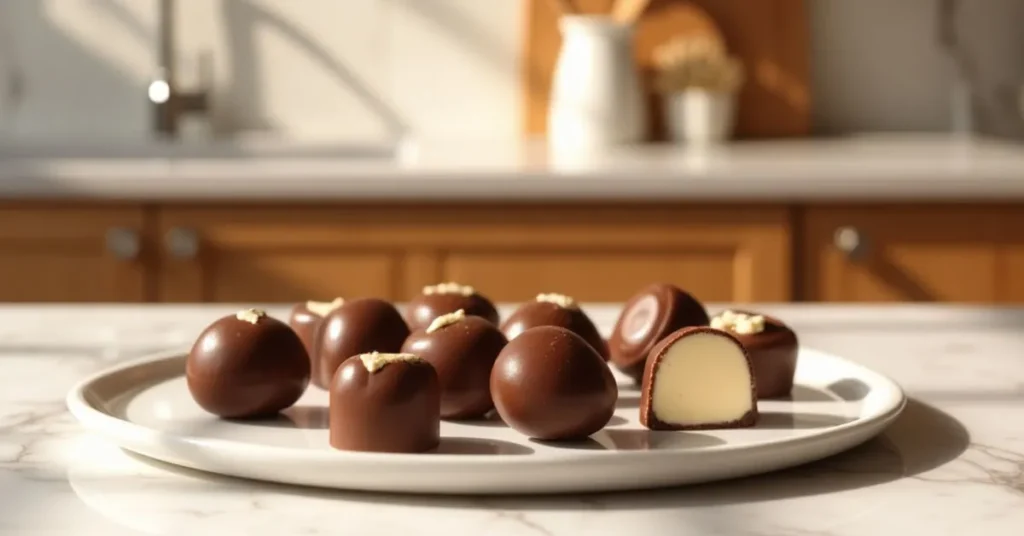
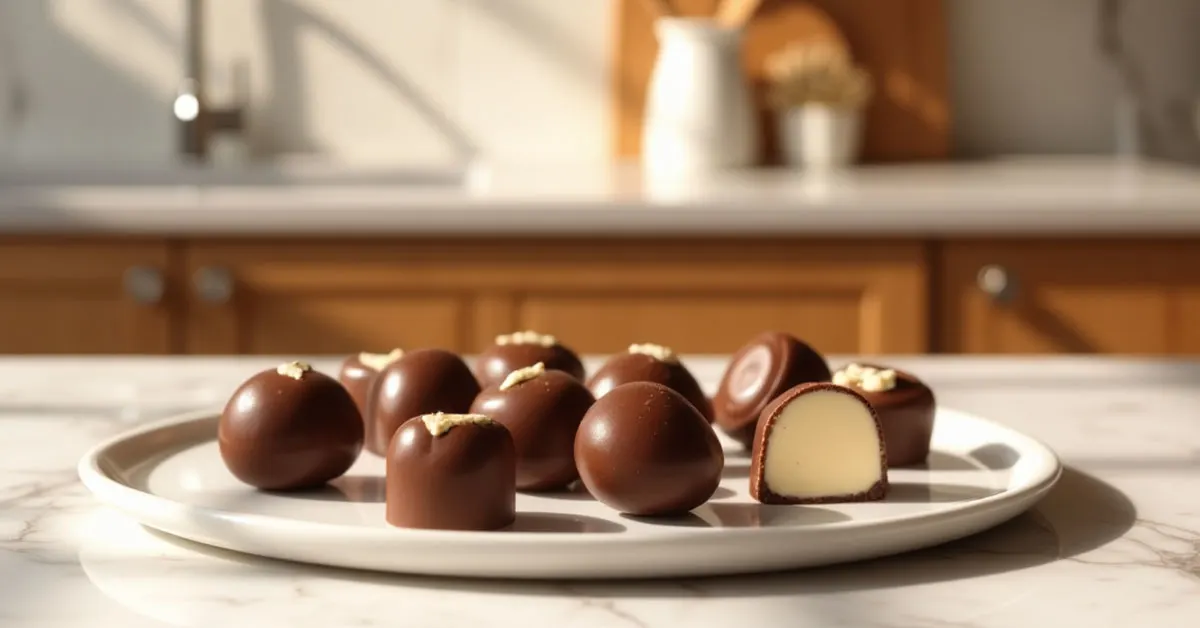
Chocolate bonbons are small molded chocolates: a thin, snappy shell of tempered chocolate around a soft filling, most often a ganache. They look like the work of a chocolatier, but at home the method comes down to three skills: tempering the chocolate, building the shells and filling them.
This recipe makes about 15 bonbons with a dark chocolate shell and a vanilla ganache. Plan around 2 hours from start to finish, most of it waiting for the chocolate to set.

Chocolate bonbons
Ingredients
Method
- Temper the chocolate. Melt two thirds of the dark chocolate to 45–50 °C over a water bath or in 20-second microwave bursts. Off the heat, stir in the remaining third until it melts and the chocolate cools to 31–32 °C. A smear on a knife tip should set glossy within 5 minutes.
- Make the shells. Fill each mould cavity to the top and tap the mould to release air bubbles. Turn it upside down over the bowl and let the excess run out, then scrape the surface clean. Let the shells set, cavities down, for 10–15 minutes.
- Make the ganache. Bring the cream just to a simmer and pour it over the chopped milk or dark chocolate. Wait 1 minute, then stir from the center until smooth. Stir in the butter and vanilla. Let it cool to about 30 °C.
- Fill. Pipe the ganache into the shells, stopping 2 mm below the rim. Let it firm up at cool room temperature for at least 1 hour.
- Cap. Re-warm the leftover tempered chocolate to its working temperature, spread it over the mould and scrape off the excess. Let it set for 20 minutes at room temperature, then 10 minutes in the fridge.
- Unmold. Turn the mould over and tap it firmly on the counter. Well-tempered bonbons drop out on their own; if some stick, chill 5 more minutes and try again.
Notes
What are chocolate bonbons?
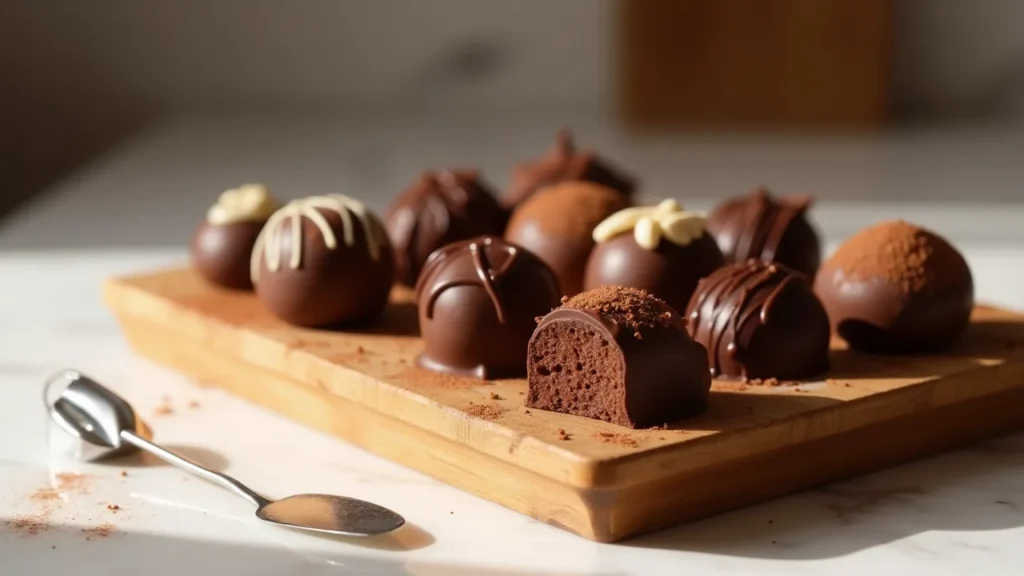
“Bonbon” is French for a sweet, and in chocolate shops it means a filled, bite-size chocolate. The shell is made in a mould, filled, then sealed with a chocolate base. That is the difference with chocolate truffles, which are balls of ganache rolled by hand and coated in cocoa or chocolate, with no mould and no shell.
In Belgium the same chocolates are called pralines, while in France a praliné is a caramelized nut paste, which is also one of the most popular bonbon fillings.
Tempering without stress
Tempering is what gives bonbons their shine and snap, and it is also what makes them release from the mould: properly tempered chocolate shrinks slightly as it sets. Untempered chocolate stays dull, streaky and stuck.
The seeding method in the recipe card is the easiest at home: melt two thirds of the chocolate, then cool it with the remaining third until it reaches its working temperature.
| Chocolate | Melt to | Work at |
|---|---|---|
| Dark (60–70%) | 45–50 °C | 31–32 °C |
| Milk | 40–45 °C | 29–30 °C |
| White | 40 °C | 28–29 °C |
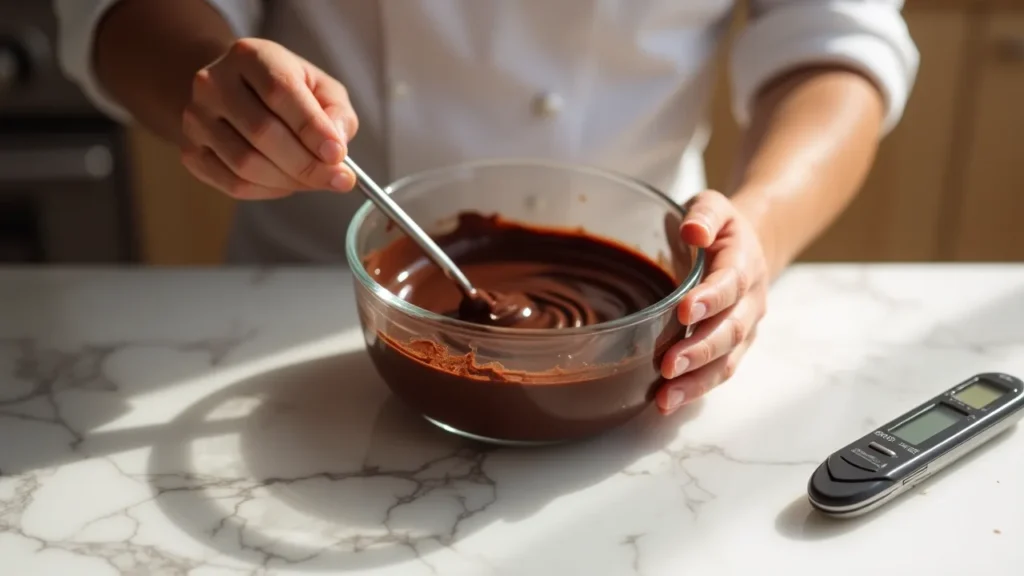
No thermometer? Dip the tip of a knife in the chocolate and leave it at room temperature. If it sets glossy and firm within 5 minutes, the chocolate is in temper. Compound “coating” chocolate needs no tempering, but its cocoa butter is replaced by other fats and it tastes waxy next to real chocolate.
Bonbon filling ideas
The filling must be soft enough to pipe but firm enough to hold under the cap. Once you master the basic chocolate ganache, vary it:
- Coffee: dissolve 1 tsp instant coffee in the hot cream.
- Raspberry: replace half of the cream with sieved raspberry purée.
- Salted caramel: pipe a little thick caramel under a thin layer of ganache.
- Pistachio: mix pistachio paste with a little melted white chocolate, as in the Dubai chocolate bar.
- Liqueur: replace the vanilla with 1 tbsp orange liqueur or rum.
Common problems and how to fix them
- Dull or grey streaks: the chocolate was out of temper. Re-melt and temper again.
- Bonbons stuck in the mould: same cause, or a mould that was warm. Chill 5 more minutes and tap firmly.
- Cracked shells: the shell was too thin or the ganache too warm when piped. Let the ganache cool to about 30 °C.
- White spots after a few days: sugar bloom from fridge humidity. Store them at cool room temperature instead.
How to store chocolate bonbons
Keep them in an airtight box at 15–18 °C, away from light and strong smells. With a cream ganache, eat them within 2 weeks. You can freeze them in an airtight box for up to 2 months; thaw them in the fridge, then at room temperature, still closed, so no condensation forms on the shells.
Chocolate bonbons FAQ
Can I make bonbons without a mould?
A small silicone ice-cube or candy tray works for a first try, although the shells will be thicker. Without any mould, roll the ganache into truffles instead.
Do I really need a thermometer?
It is the most reliable way to temper. The knife-tip test above works as a backup, but a cheap digital thermometer saves a lot of failed batches.
How long do homemade bonbons last?
About 2 weeks for a cream ganache filling, longer for nut pastes or caramel, as long as they are stored cool and dry.
Can I use chocolate chips?
Chips contain stabilizers so they hold their shape in the oven, which makes them thick and hard to temper. Use couverture or a good baking bar.
More chocolate recipes to try
- Dark chocolate truffles: the no-mould version of a filled chocolate.
- Chocolate ganache recipe: the base for most bonbon fillings.
- Hot chocolate bombs: the same shell technique, in a bigger mould.
Happy baking! — Hassoun