
This easy chocolate mousse uses only four ingredients: dark chocolate, eggs, sugar and cream. It is light, silky and deeply chocolatey, and it makes 4 generous glasses. Preparation takes about 15 minutes, with 5 minutes to melt the chocolate, and then the mousse needs at least 2 hours in the refrigerator to set.
There is no baking and no gelatin. The texture comes from three things: melted chocolate, egg whites whipped into a foam, and whipped cream folded in gently. The recipe is simple, but it rewards patience, because folding too fast knocks the air out and leaves a dense, heavy mousse.
One important note: this recipe uses raw eggs, so read the safety section below before you start. You will also find how the mousse works, what each ingredient does, how to fix the usual problems, and how to store it. For a version made in a blender with no eggs, see my cottage cheese chocolate mousse.

You might also like my chocolate strawberry trifle, a layered dessert with fresh strawberries, cream and chocolate sauce.
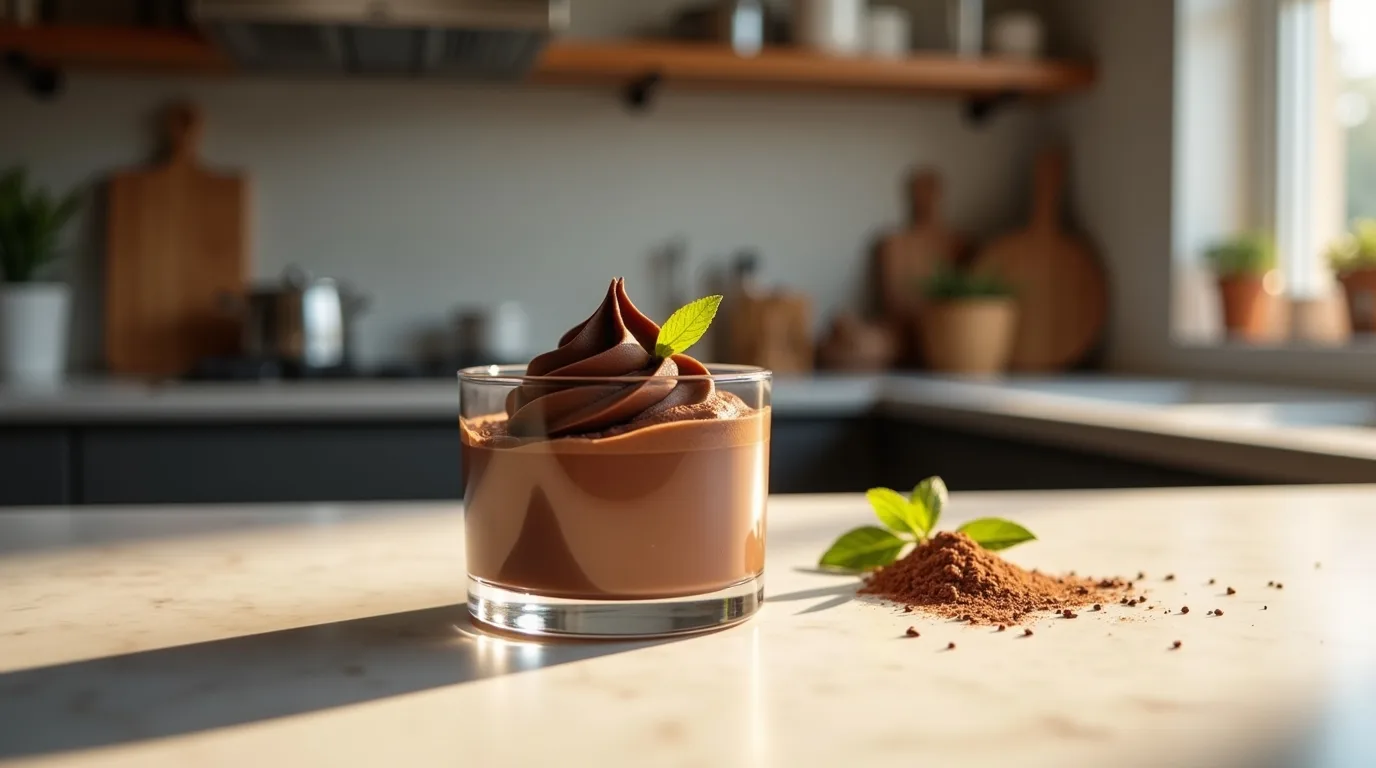

Easy Chocolate Mousse
Ingredients
Method
- Melt the chocolate. Put the chopped chocolate in a heatproof bowl and melt it over barely simmering water, or in the microwave in 20 to 30 second bursts, stirring between each. Stir until smooth, then let it cool until just warm, about 40°C (104°F).
- Separate the eggs. Put the whites in a clean, dry bowl and the yolks in a small bowl. Make sure no yolk gets into the whites.
- Whip the whites. Whip the egg whites to soft peaks, then add the sugar gradually and keep whipping until the foam is glossy and holds firm peaks.
- Add the yolks. Whisk the egg yolks into the warm chocolate, one at a time. The mixture will thicken slightly.
- Whip the cream. In another bowl, whip the cold cream to soft peaks. Stop as soon as it holds its shape.
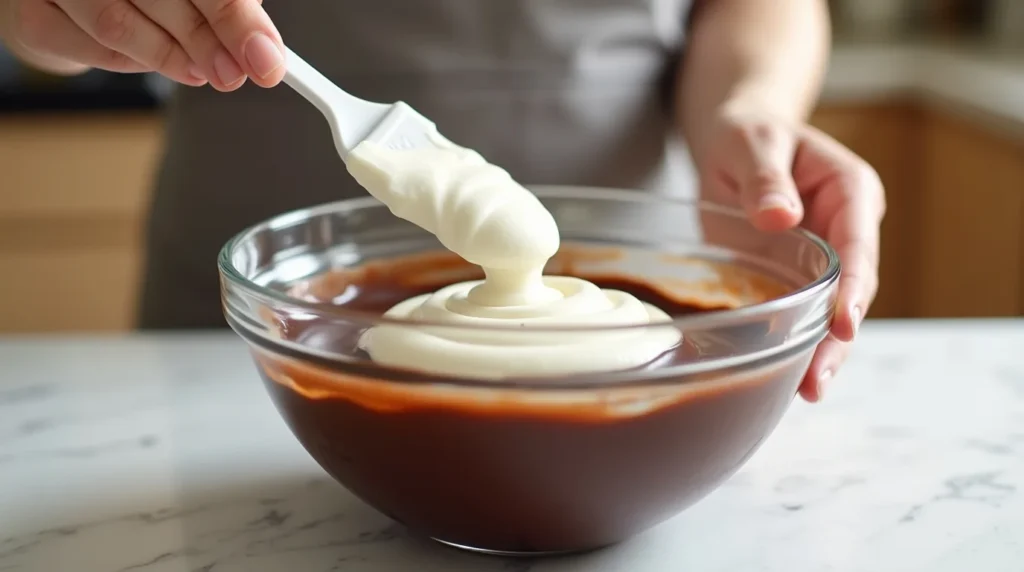
- Fold. Stir a third of the cream into the chocolate to loosen it, then fold in the rest. Fold in the egg whites in 2 or 3 batches, using slow, lifting movements, until no white streaks remain.
- Chill. Spoon the mousse into 4 glasses or ramekins, cover loosely and chill for at least 2 hours, until set. Serve cold.
Notes
What Is Chocolate Mousse?
Mousse is French for foam, and a chocolate mousse is a foam of chocolate, eggs and cream. The air that is whipped into the egg whites and the cream makes it much lighter than a pudding or a ganache, and the melted chocolate and egg yolks make it rich and smooth. The Wikipedia entry on mousse explains the origins of the word and the many styles of the dish.
This version is the classic French-style method, with separated eggs. It differs from my cottage cheese chocolate mousse, which uses no eggs, and from my chocolate mousse cake, where a layer of mousse sits on a chocolate sponge.
It also helps to know how mousse compares with its neighbours. A ganache is chocolate and cream only, so it is dense and fudgy. A pudding is thickened with starch or eggs and cooked, so it is heavier and more custard-like. A mousse is uncooked and aerated, which is why it feels almost weightless on the tongue even though it contains plenty of chocolate and cream. That lightness is the whole point, and it is why the folding technique matters so much.
Why This Easy Chocolate Mousse Recipe Works
- Dark chocolate with 60 to 70 per cent cocoa. It gives the mousse a deep chocolate flavour and enough cocoa butter to set. Sweeter chocolate gives a softer, sweeter mousse.
- Egg yolks in the chocolate. They add richness and help the mousse set smooth and creamy.
- Whipped egg whites. They trap air and give the mousse its light, cloud-like body. Sugar added slowly makes the foam shiny and stable.
- Whipped cream. It adds fat and silkiness. Cream whipped only to soft peaks folds in easily without making the mousse grainy.
- Gentle folding and chilling. Folding in three stages keeps the air in the mousse, and the time in the refrigerator lets the chocolate and cream set.
Together, these steps turn four simple ingredients into a dessert that looks professional. None of them is difficult, but each one protects the air in the mousse, so it is worth working calmly and keeping everything cold, clean and well measured.
Easy Chocolate Mousse Ingredients and What Each One Does
The mousse has only four ingredients, so the quality of each one shows. The exact quantities are in the recipe card above.
- Dark chocolate (150 g). Choose a bar with 60 to 70 per cent cocoa, not chocolate chips, which are made to hold their shape and melt less smoothly. Chop it finely so it melts evenly.
- Eggs (3 large). You separate them: the yolks go into the chocolate, and the whites are whipped. Use fresh, very cold eggs for the whites, and make sure no yolk gets into them.
- Sugar (30 g). It sweetens the mousse a little and stabilises the whipped whites. Caster sugar dissolves best.
- Heavy whipping cream (150 ml). Use cream with at least 35 per cent fat, well chilled, so it whips to soft peaks.
A few optional flavours are worth knowing about. A teaspoon of vanilla extract or a tablespoon of rum, brandy or orange liqueur can be stirred into the warm chocolate, and a tiny pinch of salt sharpens the flavour. The recipe does not need them, which is why it counts as an easy chocolate mousse with four ingredients, but they are pleasant if you want to dress it up for guests. Keep the quantities small, because extra liquid can loosen the mixture and stop it setting.
Is Chocolate Mousse Made with Raw Eggs Safe?
This recipe uses raw eggs, which carry a small risk of Salmonella. If you want to make the mousse, use very fresh eggs, or pasteurised eggs if they are sold where you live, and keep the mousse in the refrigerator. Raw egg dishes are not recommended for pregnant women, young children, older adults or anyone with a weakened immune system. If that applies to anyone eating the mousse, use a recipe that does not contain raw eggs, such as my cottage cheese chocolate mousse.
Equipment You Need
- Three clean bowls. One for the chocolate, one for the whites and one for the cream. A bowl for the whites must be completely free of grease, or the foam will not form.
- An electric mixer or a large balloon whisk. A mixer makes the whites and cream much faster, but you can whisk by hand with patience.
- A flexible spatula. Use it for folding, with slow, circular movements.
- A heatproof bowl and a small pan. They make a bain-marie for melting the chocolate gently. You can also use a microwave in short bursts.
- Four glasses or ramekins. Each should hold about 175 ml.
- A kitchen thermometer (optional). It tells you when the melted chocolate has cooled to about 40°C (104°F), which is the safe point for adding the yolks.
How to Make Light Chocolate Mousse: Tips That Matter
The steps are in the recipe card. These points decide whether the mousse is light and silky or dense and grainy.
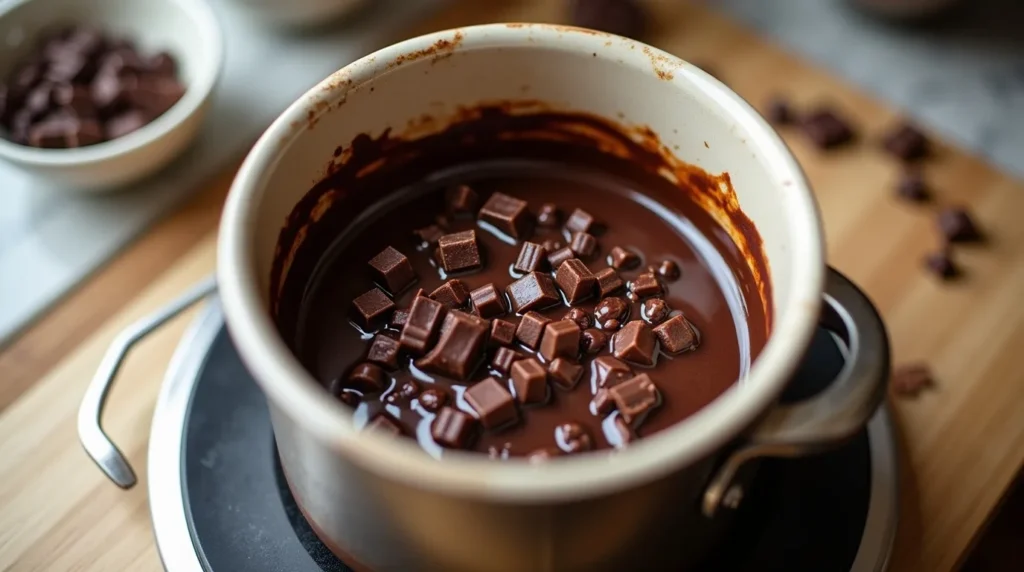
- Melt the chocolate gently. Use low heat and stir between short bursts. Stop while a few small lumps remain, then stir until smooth. Overheated chocolate turns grainy.
- Cool the chocolate until warm, not hot. It should feel just warm to the touch, about 40°C (104°F). Hot chocolate cooks the yolks and melts the cream.
- Separate the eggs carefully. A trace of yolk in the whites prevents them from whipping properly. Separate each egg over a small bowl before adding it to the main bowl.
- Whip the whites to firm peaks. Add the sugar gradually once soft peaks form. The foam is ready when it is glossy and holds its shape when you lift the whisk.
- Whip the cream only to soft peaks. Stop as soon as it holds a loose shape. Overwhipped cream turns grainy and makes the mousse heavy.
- Fold in stages. Add a third of the cream to the chocolate and stir to loosen it, then fold in the rest, then the whites in two or three batches. Cut down through the middle and lift, rather than stirring.
- Chill for at least 2 hours. The mousse sets in the refrigerator. Cover it loosely, so it does not pick up other flavours.
- Use clean metal or glass bowls. Plastic can hold traces of grease, which stops egg whites from whipping to a stable foam.
- Separate the eggs cold, whip them at room temperature. Cold eggs separate more cleanly, but whites whip to a greater volume once they have stood for about 20 minutes.
Common Chocolate Mousse Problems and How to Fix Them
Most problems come from temperature or folding. Match what you see with the likely cause below.
| Problem | Cause | Fix |
|---|---|---|
| Grainy mousse | Chocolate overheated, or cream overwhipped | Melt the chocolate gently, and whip the cream only to soft peaks. |
| Runny mousse | Whites or cream underwhipped, or too much stirring | Whip to the right stage and fold gently. Chill for longer. |
| Dense, heavy mousse | Air knocked out when folding | Fold in stages with slow, lifting movements. |
| Streaks of white in the mousse | Folding stopped too soon | Fold a little longer, until the colour is even, but do not stir. |
| Whites will not whip | A trace of fat or yolk in the bowl | Use clean, dry bowls and separate the eggs carefully. |
| Bits of cooked egg | Chocolate too hot when the yolks went in | Cool the chocolate until warm, not hot, before adding the yolks. |
| Tastes too bitter | Chocolate with a very high cocoa content | Use 60 to 70 per cent chocolate, or add a teaspoon of extra sugar. |
If your mousse has a problem that is not in the table, check the temperature first. Chocolate that is too hot, cream that is too warm and whites that were whipped in a greasy bowl account for most failures. Cool, clean and gentle is a good rule for the whole recipe.
Chocolate Mousse Variations
These are standard adjustments to the base recipe. I have not tested each one on this site, so treat them as starting points and taste as you go.
- Orange. Add the grated zest of 1 orange to the melted chocolate. Orange and dark chocolate are a classic pairing.
- Espresso. Stir 1 teaspoon of instant espresso powder into the warm chocolate for a deeper flavour.
- Spiced. Add ¼ teaspoon of ground cinnamon and a tiny pinch of cayenne.
- Sea salt. Finish each glass with a few flakes of sea salt.
- Berries. Layer the mousse with raspberries or sliced strawberries in a glass.
- Boozy. Stir 1 tablespoon of rum or orange liqueur into the warm chocolate. Keep it to one tablespoon, so the mousse still sets.
- Mint. Add ¼ teaspoon of peppermint extract to the melted chocolate for a fresh, cool finish.
How to Serve Easy Chocolate Mousse
Serve the mousse cold, straight from the refrigerator, in small glasses. Dark chocolate shavings, fresh berries or a spoonful of whipped cream finish it nicely. If you are planning a dessert table, it pairs well with a warm dessert such as my chocolate lava cake, because the cold, airy mousse contrasts with the molten centre.
For a neat presentation, spoon the mousse into the glasses while it is still soft, or pipe it with a large round tip. Wipe the rims clean before chilling. A portion of about 175 ml is generous, so small espresso cups are a good choice if you are serving a crowd after a large meal. This easy chocolate mousse looks best with one simple garnish rather than several.
How to Store Chocolate Mousse
- Refrigerator: keep the mousse covered for up to 2 days. Because it contains raw eggs, do not keep it longer.
- Freezer: I do not recommend freezing it. I have not tested it, and the airy texture is likely to change.
- Make ahead: prepare the mousse the day before. It sets overnight and tastes even better the next day.
Easy Chocolate Mousse FAQ
Can I make easy chocolate mousse in advance?
Yes. It needs at least 2 hours to set, and it keeps well for up to 2 days in the refrigerator. Cover it loosely, and add toppings just before serving.
Can I use milk chocolate instead of dark chocolate?
You can, but the mousse will be sweeter and softer, and it may not set as firmly. Milk chocolate contains less cocoa, so consider using a little more, around 180 g. I have not tested this, so check the texture after chilling.
What if my easy chocolate mousse is too runny?
Chill it for longer first, because it keeps setting for several hours. If it is still runny, the whites or the cream were probably underwhipped, or the mousse was stirred too much when folding. Next time, whip to the right stage and fold gently.
Can I replace heavy cream with something else?
Not easily. Heavy cream has the fat that makes the mousse rich and stable. Light cream or milk will not whip, so the mousse will be thinner and less airy.
Is chocolate mousse with raw eggs safe?
It carries a small risk of Salmonella. Use very fresh or pasteurised eggs and keep the mousse refrigerated. People who are pregnant, elderly, very young or have a weakened immune system should avoid raw egg dishes.
Can I use cocoa powder instead of chocolate?
No. Cocoa powder has no cocoa butter, so the mousse will not set and the texture will be thin and gritty. Use real chocolate for this recipe.
More Chocolate Dessert Recipes to Try
- Chocolate mousse cake for a chocolate sponge topped with a light chocolate mousse.
- Cottage cheese chocolate mousse for a quick, high-protein version made in a blender.
- Chocolate lava cake for a molten chocolate dessert baked in individual ramekins.
- Homemade cannolis for another classic dessert.
Happy baking! — Hassoun