
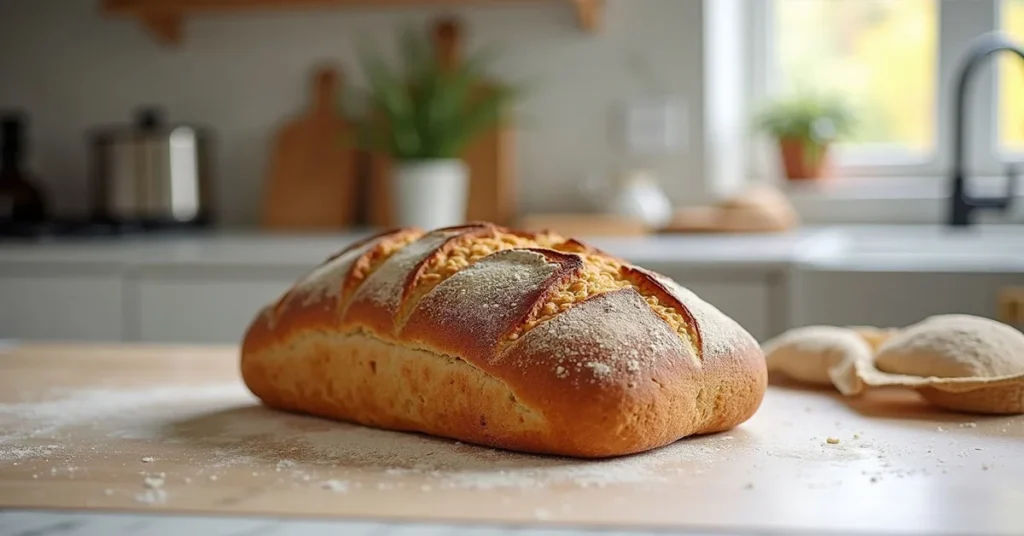
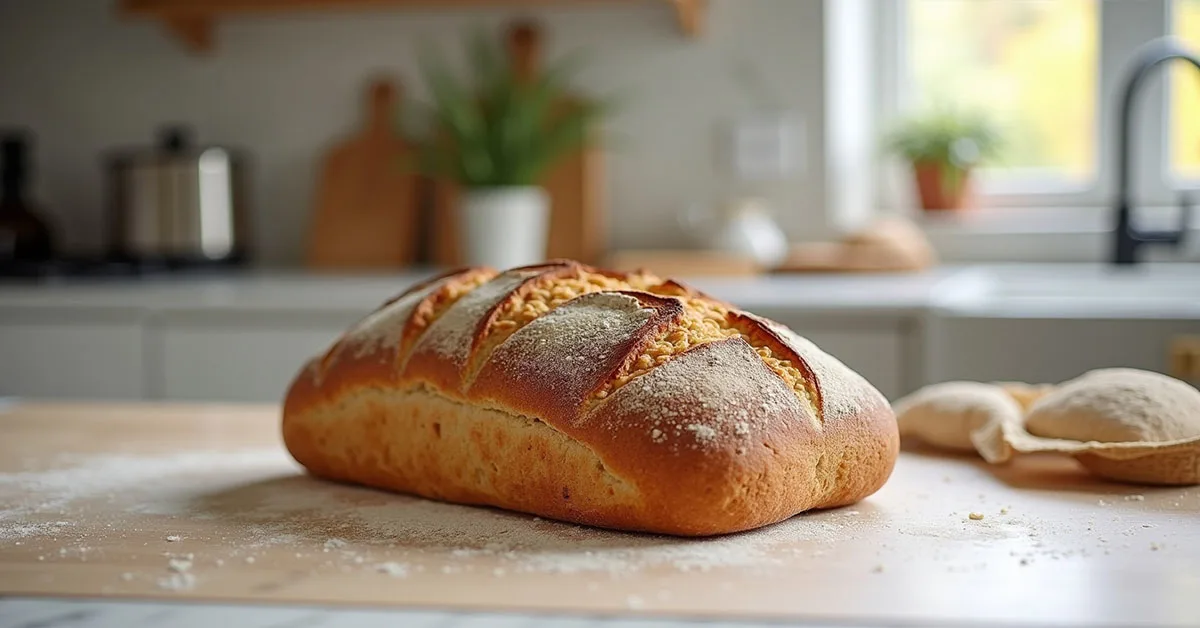
This Ezekiel bread recipe makes a hearty whole-grain loaf from the six ingredients named in Ezekiel 4:9: wheat, barley, beans, lentils, millet and spelt. Everything is ground into flour and baked in a loaf pan, so you get a dense but soft sandwich bread with a nutty, slightly sweet flavor.
It makes one 9 × 5-inch loaf, about 12 slices. Hands-on time is around 30 minutes; the rest is rising, baking and cooling, about 4 ½ hours in total. You need a high-speed blender or a grain mill to grind the lentils, beans and millet, or you can buy them already ground.
One thing to know before you start: Ezekiel bread is made with wheat and spelt, so it contains gluten. Below the recipe card you will also find a cocoa and dark chocolate version, the reasons behind each step, and fixes for the problems whole-grain doughs tend to have.

Ezekiel bread recipe
Ingredients
Method
- Grind. Grind the millet, lentils and beans in a high-speed blender or grain mill for 1–2 minutes, until fine. Sift and regrind any coarse pieces. Whisk with the wheat, spelt and barley flours and the salt in a large bowl.
- Start the yeast. Stir the honey and yeast into the warm water and leave for 5–10 minutes, until foamy.
- Mix. Pour the yeast mixture and olive oil into the flours and stir until no dry flour remains. The dough should be soft and tacky. Cover and rest for 10 minutes.
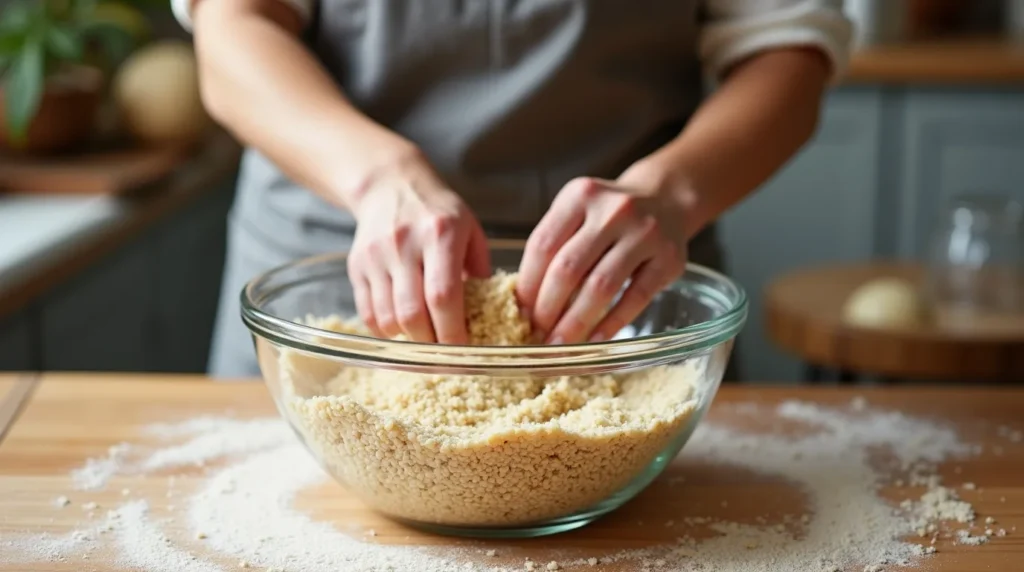
- Knead. Knead for 8–10 minutes by hand, or 6–8 minutes with a dough hook on low speed, until springy. Keep it slightly sticky; dust your hands rather than the dough.
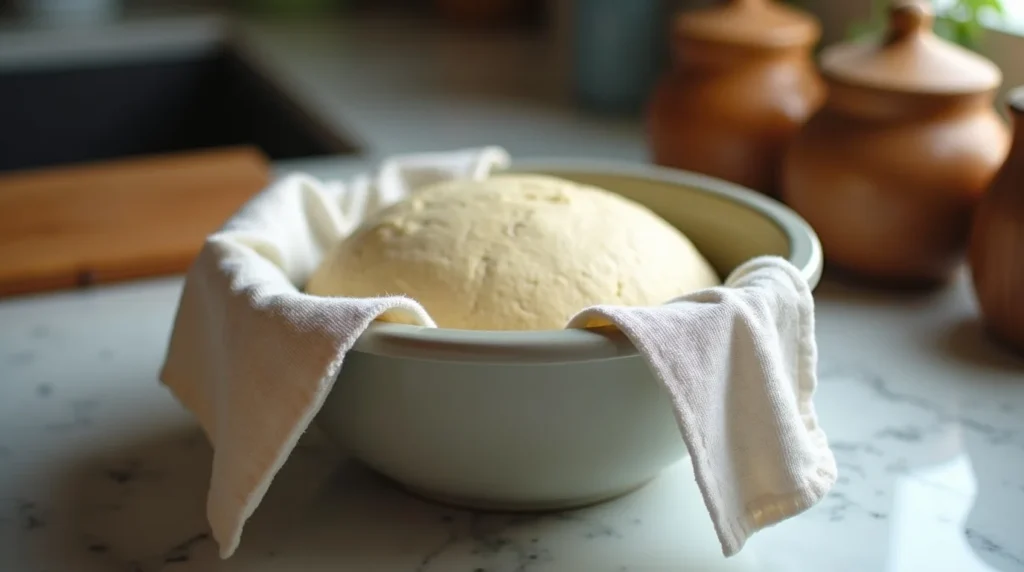
- First rise. Place the dough in an oiled bowl, cover and leave in a warm place for 60–90 minutes, until doubled.
- Shape. Press out the air, roll the dough into a tight log and place it seam side down in an oiled 9 × 5-inch (23 × 13 cm) loaf pan.
- Second rise. Cover and leave for 30–45 minutes, until the dough domes about 2 cm above the rim. Meanwhile, heat the oven to 190 °C (375 °F).
- Bake. Bake for 40–45 minutes, until deep golden and 93–96 °C (200–205 °F) in the center. Tent with foil after 25 minutes if the top browns quickly.
- Cool. Cool in the pan for 10 minutes, then on a rack for at least 1 hour before slicing.
- Make it chocolate. Whisk the cocoa into the flours in step 1 and add the extra honey to the yeast mixture. Add the extra water in step 3 if the dough feels stiff, and fold in the chopped chocolate at the end of kneading.
Notes
What is Ezekiel bread?
Ezekiel bread takes its name from a verse in the Book of Ezekiel. In the King James Version, Ezekiel 4:9 reads: “Take thou also unto thee wheat, and barley, and beans, and lentiles, and millet, and fitches, and put them in one vessel, and make thee bread thereof.” Most modern translations render “fitches” as spelt. You can read the full verse on Bible Gateway.
That is why people also search for it as Bible bread or biblical bread. The loaves sold in health food stores are usually made from sprouted whole grains and contain no added flour, which is where the name “sprouted Ezekiel bread” comes from. At home, sprouting and drying six different grains takes several days, so this Ezekiel bread recipe uses the same grains and legumes as dry flours. The result is close in flavor and texture, and you can bake it on a weekend afternoon.
Sprouted or unsprouted: which should you choose?
Sprouting means soaking whole grains until they just begin to grow, then drying and milling them. Sprouted flours taste slightly sweeter and less bitter than regular whole-grain flours, and many people find them easier to digest, although the research on that is still limited. They also cost more and are harder to find.
For a first loaf, regular whole-grain flours are the practical choice: the loaf rises the same way and tastes very similar. If you enjoy the bread and want the store-bought style, switch the whole wheat and spelt flours to sprouted versions, weight for weight. Sprouting your own grains is possible too, but it adds two to three days of soaking, rinsing and drying before you can bake.
Why this Ezekiel bread recipe works
- Wheat and spelt carry the structure: they make up 70% of the flour and provide the gluten that traps gas. Barley, millet and legume flours have little or none, so they are kept to a third so the loaf still rises.
- High hydration: whole-grain and legume flours absorb much more water than white flour. At 75% water to flour, the dough feels sticky at first but bakes into a moist crumb instead of a dry brick.
- Honey for the yeast and the crumb: 2 tablespoons feed the yeast at the start and keep the crumb soft for several days.
- A loaf pan: a dough this heavy spreads on a flat tray. The pan supports it so it rises upward.
- Baking to temperature: whole-grain loaves can look done outside while still damp inside. Checking for 93–96 °C in the center removes the guesswork.
Ezekiel bread ingredients
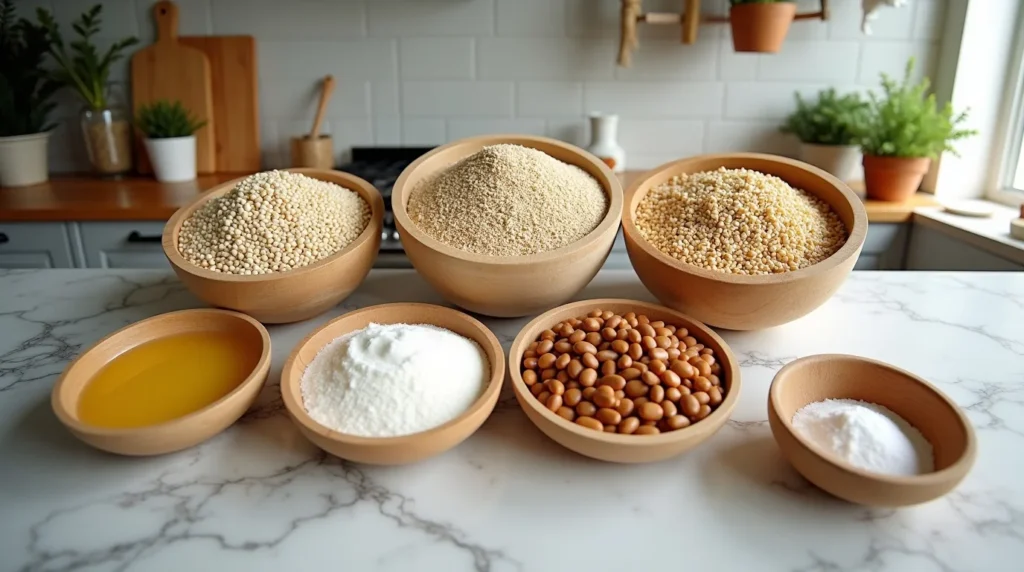
The ingredients follow the verse, plus water, yeast, honey, oil and salt. Here is what each one does in this Ezekiel bread recipe and where to find it.
- Whole wheat flour (250 g): the base of the loaf. Bread flour or a strong whole wheat flour gives the best rise.
- Whole spelt flour (100 g): an ancient relative of wheat with a sweeter, nuttier taste. It still contains gluten. See spelt for more on the grain.
- Barley flour (50 g): adds a mild, malty flavor. Grind pearl barley in a blender if you cannot find the flour.
- Millet (40 g): ground to a fine flour, it adds a slightly sweet, corn-like note.
- Dry lentils (30 g): green or brown lentils, ground to flour. They add protein and an earthy flavor.
- Dry white beans (30 g): navy or great northern beans, ground to flour. Do not use raw kidney beans, which contain a natural toxin that is only destroyed by thorough boiling.
- Yeast, honey, olive oil and salt: one packet of active dry yeast (7 g), 2 tablespoons each of honey and olive oil, and 1 ½ teaspoons of salt.
Grinding dry legumes is easy in a high-speed blender: pulse for one to two minutes, then sift and regrind any large pieces. Lentil and white bean flours are also sold ready-made, which saves the step. The flour mix is sometimes sold as an “Ezekiel flour mix”; if you buy one, use 500 g of it in place of the six flours.
Equipment
- High-speed blender or grain mill: to grind the millet, lentils and beans. A coffee grinder works in small batches.
- Kitchen scale: whole-grain flours pack differently, so weights are far more reliable than cups here.
- Large mixing bowl: the dough doubles during the first rise, so give it room.
- 9 × 5-inch (23 × 13 cm) loaf pan: metal gives the best crust.
- Stand mixer with a dough hook (optional): it saves some kneading, but the dough is easy to knead by hand.
- Instant-read thermometer: the most reliable way to tell when the loaf is baked through.
Tips for a soft, well-risen loaf
Whole-grain doughs behave differently from white bread, and most problems with an Ezekiel bread recipe come from treating them the same way. These points make the difference.
- Keep the dough tacky. It should stick lightly to your fingers. Adding flour until it is smooth and dry makes a dense, crumbly loaf.
- Let the dough rest 10 minutes before kneading. The bran and legume flours soak up water during the rest, so the dough firms up on its own and is easier to knead.
- Do not expect a stretchy windowpane. With a third of low-gluten flours, the dough will not stretch as thin as white dough. Knead until it feels springy and holds its shape.
- Rise in a warm spot, 24–27 °C (75–80 °F). In a cold kitchen, the first rise can take two hours; watch the dough, not the clock.
- Use the poke test before baking. Press a floured finger into the dough. If the dent springs back slowly and only partly, it is ready.
- Bake until the center reaches 93–96 °C (200–205 °F). Tent with foil after 25 minutes if the top browns too fast.
- Cool for at least an hour before slicing. The crumb finishes setting as it cools; cut too early and it turns gummy.
A simple baking-day schedule
The total time looks long, but most of it is waiting. Here is how a typical Ezekiel bread recipe day fits around other things:
- 0:00 — grind the legumes and millet, weigh the flours, start the yeast (15 minutes).
- 0:15 — mix, rest 10 minutes, then knead (20 minutes).
- 0:35 — first rise, 60 to 90 minutes.
- 2:00 — shape the loaf, then second rise for 30 to 45 minutes; heat the oven.
- 2:45 — bake for 40 to 45 minutes.
- 3:30 — cool for at least an hour, then slice.
With the overnight option described below, you can mix and shape in the evening and bake first thing in the morning.
Common problems and how to fix them
| Problem | Likely cause | Fix |
|---|---|---|
| Dense, heavy loaf | Too much flour added while kneading, or not enough rise | Keep the dough tacky and let it double before shaping |
| Loaf did not rise | Water too hot or too cold, or old yeast | Use water at 38–40 °C and check that the yeast foams within 10 minutes |
| Gummy center | Underbaked, or sliced while warm | Bake to 93–96 °C inside and cool for an hour |
| Cracked or split top | Underproofed before baking | Wait until the dough domes about 2 cm above the rim |
| Gritty texture | Legumes or millet not ground finely enough | Sift the ground flour and regrind the coarse pieces |
| Dry, crumbly slices | Too little water for whole-grain flours | Keep the full 375 ml water; add 1–2 tbsp more if the dough feels stiff |
| Collapsed after rising | Overproofed in a very warm room | Shorten the second rise and bake as soon as it passes the poke test |
Chocolate Ezekiel bread and other variations
The nutty flavor of whole grains works well with cocoa, which is why I give a chocolate option for this Ezekiel bread recipe. It is in the recipe card: whisk 30 g (⅓ cup) of unsweetened cocoa into the flours, add an extra tablespoon of honey to the yeast mixture, and add 2–3 tablespoons of extra water if the dough feels stiff. At the end of kneading, fold in 100 g of chopped dark chocolate (60–70% cocoa). Toasted, the chocolate pieces soften slightly.
- Seeded: knead in 40 g of sunflower seeds and 2 tablespoons of flaxseed, and sprinkle more on top before baking.
- Cinnamon and raisin: add 1 teaspoon of cinnamon to the flours and fold in 80 g of raisins after kneading.
- Sprouted flours: replace the whole wheat and spelt flours with sprouted versions, weight for weight, for a loaf closer to the store-bought kind.
- Overnight rise: after shaping, cover the pan and refrigerate it for up to 12 hours. Let it stand at room temperature for an hour before baking. The slower rise gives a deeper flavor.
How to serve Ezekiel bread
Ezekiel bread is at its best toasted. The crust crisps, the inside softens and the grains taste nuttier. Try it with nut butter and sliced banana, with avocado and an egg, or simply with butter and honey. It makes sturdy sandwiches because the crumb is tight and does not tear.
The chocolate version is best as breakfast toast or a snack, with a little salted butter or a thin layer of almond butter.
How to store homemade Ezekiel bread
- Room temperature: up to 3 days, in a bread bag or wrapped in a clean cloth, cut side down on the board.
- Fridge: not recommended. Bread goes stale faster in the fridge, although it keeps mold away in very humid weather.
- Freezer: slice the cooled loaf, freeze the slices in a freezer bag for up to 3 months, and toast them straight from frozen.
- Ground flours: legume and millet flours keep for about a month in an airtight jar in a cool cupboard, or longer in the freezer, so you can grind a double batch.
Ezekiel bread recipe FAQ
Is Ezekiel bread gluten-free?
No. Ezekiel bread is made with wheat and spelt, and spelt is a type of wheat, so it contains gluten. It is not suitable for people with celiac disease or a gluten intolerance.
Do I have to sprout the grains for this Ezekiel bread recipe?
No. This version uses dry flours from the same grains and legumes, which is much quicker. If you want the sprouted style, use sprouted whole wheat and sprouted spelt flours in the same weights.
Can I make this Ezekiel bread recipe in a bread machine?
Yes, on the whole wheat setting with a 1 ½-pound loaf size. Add the liquids first, then the flours, salt and yeast. Check the dough after 5 minutes and add a tablespoon of water if it looks dry.
Why is my homemade Ezekiel bread so dense?
Usually because flour was added during kneading or the dough did not rise long enough. Keep the dough slightly sticky, let it double in the first rise, and bake it only after it domes above the rim of the pan.
Can I use canned beans or cooked lentils?
Not in place of the bean and lentil flours: cooked legumes add a lot of water and change the dough. Use dry legumes ground to flour, or buy lentil and white bean flours.
Is Ezekiel bread healthy?
It is a whole-grain bread with legumes, so it has more fiber and protein than white bread. It still contains carbohydrates and gluten, so whether it suits you depends on your own diet.
What are the ingredients in Ezekiel bread?
The six named in Ezekiel 4:9: wheat, barley, beans, lentils, millet and spelt. Home recipes add water, yeast, salt and usually a little honey and oil.
More bread recipes to try
- Chocolate chip banana bread: a moist quick bread made with ripe bananas.
- Cottage cheese banana bread: a higher-protein loaf with chocolate.
- Banana chocolate chip muffins: the same flavors in muffin form.
Happy baking! — Hassoun